ELIZA Effect: The 1966 Chatbot Trick Nobody Can Switch Off
In 1966, an MIT chatbot fooled a woman who watched it get built. She still begged for privacy. Why can't our brains resist the ELIZA effect — even today?
A woman sits at a clattering computer terminal in 1966. She types out her worries. The machine types back, gently, asking her to say more. After a few minutes she turns to the man standing behind her — the man who built the program, who she had watched write it line by line for months — and asks him to leave the room. She wants privacy. She wants to be alone with the software.
The program could not understand a single word she said. And that is the scariest part of this whole story. Sixty years on, in 2025, researchers even resurrected ELIZA's original lost code and set it running again on the machine it was born on - and the revival didn't change a single thing about why we fall for it.
> The 60-Second Brief
> - Joseph Weizenbaum built ELIZA at MIT between 1964 and 1966, publishing it in Communications of the ACM in January 1966.
> - It ran on a room-sized IBM 7094 mainframe, and its famous DOCTOR script worked by matching keywords, not understanding them.
> - In 1976, Weizenbaum published Computer Power and Human Reason, warning there are things computers "ought not do even if they can."
> - ELIZA's original source code sat lost for roughly 55 years, until an MIT archivist found Weizenbaum's printouts in 2021.
> - In January 2025, five researchers published "ELIZA Reanimated" (arXiv:2501.06707), restoring the program on an emulated IBM 7094.
> - The recovered code - about 2,600 lines of mostly uncommented MAD and FAP - revealed ELIZA could run several personas beyond the therapist script, detailed in a 2026 book.
The Documented Facts
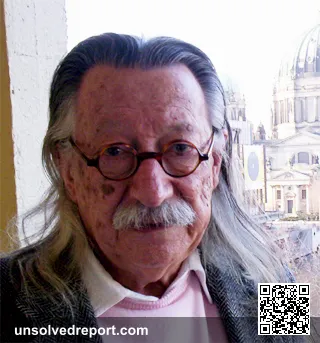
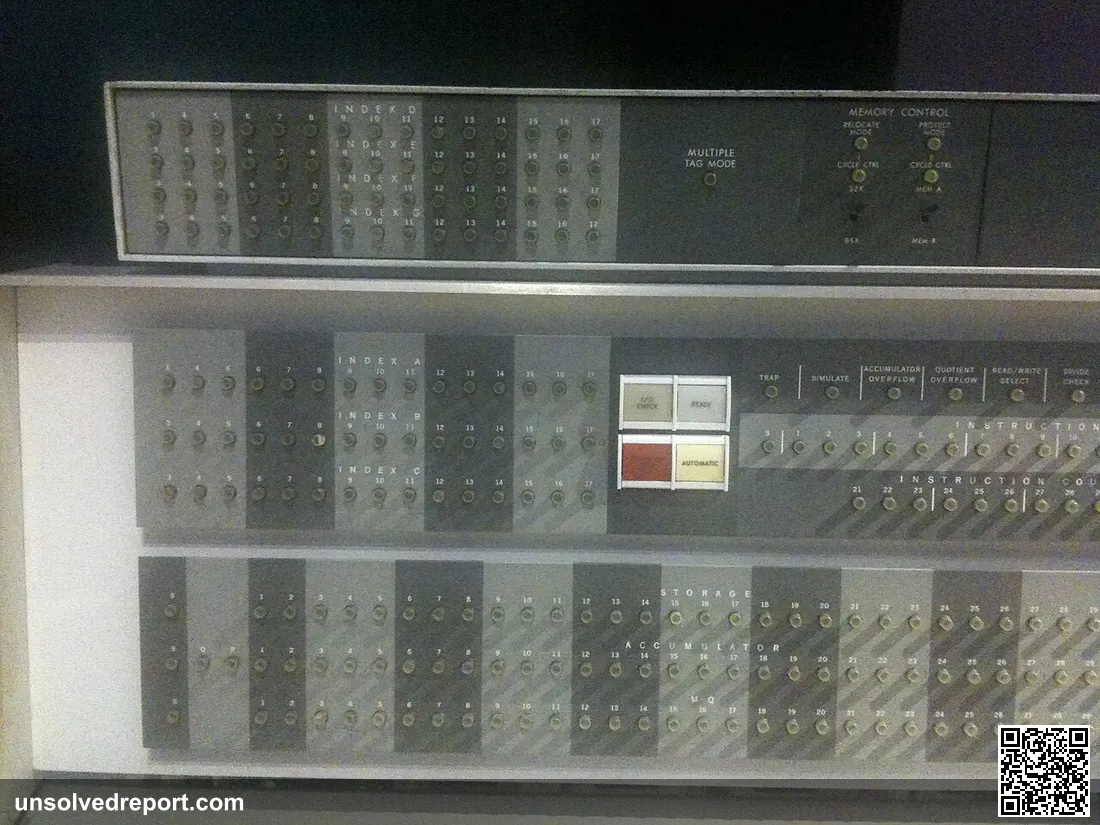
ELIZA was written between 1964 and 1966 by Joseph Weizenbaum, a computer scientist at MIT. It is widely called the world's first chatbot. He published it in January 1966 in the journal Communications of the ACM, and the program ran on a room-sized IBM 7094 mainframe, written in a language called MAD-SLIP (Wikipedia: ELIZA).
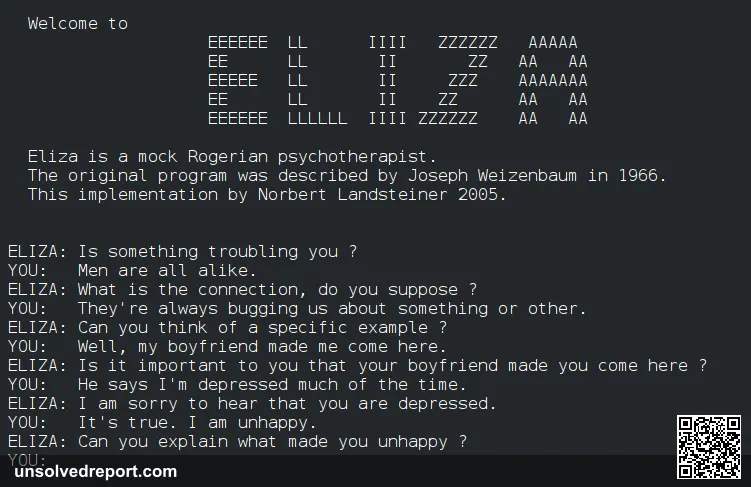
Here is the trick under the hood, and it is shockingly simple. ELIZA did not "think." Its most famous version, a script called DOCTOR, imitated a Rogerian psychotherapist — the kind of therapist who reflects your words back at you. You type "I'm scared," and it answers "Why are you scared?" It scanned your sentence for keywords, ranked them, then chopped the sentence apart and stitched a question back together using fixed rules (Wikipedia: ELIZA). No memory of the real world. No idea what "scared" actually means. Just pattern-matching and mirrors.
Weizenbaum picked the therapist role on purpose. A therapist who only asks questions doesn't need to know anything — which let him "sidestep the problem of giving the program a data base of real-world knowledge" (Wikipedia: ELIZA). It was, in a sense, a clever cheat.
Then came the secretary. She had watched him build the thing. She knew it was a trick. And she still asked him to leave so she could confide in it (Smithsonian Magazine). Weizenbaum was rattled for the rest of his life. He later wrote: "What I had not realized is that extremely short exposures to a relatively simple computer program could induce powerful delusional thinking in quite normal people" (Smithsonian Magazine).
That gut-punch turned the inventor of the chatbot into one of its loudest critics. In 1976 he published Computer Power and Human Reason, arguing there are things computers ought not do even if they can — and he called the idea of computers replacing psychotherapists "an obscene idea" (Smithsonian Magazine). "I'm not an AI critic," he said. "I'm a critic of society" (HISTORY).
The behavior he spotted got a name: the ELIZA effect — our reflex to read real understanding, feeling, and intelligence into a machine that has none (Built In).
2025: ELIZA's lost code comes back to life
For over fifty years, ELIZA's actual source code sat unpublished. Weizenbaum's original 1966 listing never appeared in full, and it stayed missing until an MIT archivist unearthed his old MAD-SLIP printouts in the university's archives in 2021. In January 2025, a team of five researchers — Rupert Lane, Anthony Hay, Arthur Schwarz, David M. Berry, and Jeff Shrager — published "ELIZA Reanimated," reconstructing the handful of missing lines and getting the program running again inside an emulation of the original IBM 7094 and its CTSS time-sharing system, released as open-source software (arXiv:2501.06707).
What they found complicated the simple story. The recovered code, laid out in the 2026 book Inventing ELIZA: How the First Chatbot Shaped the Future of AI, showed Weizenbaum had built something closer to a full scripting platform than a single trick — capable of running personas well beyond the DOCTOR therapist, including a tutor and a script for chatting about geography, each swappable without touching the core engine (IEEE Spectrum). ELIZA, it turns out, was cleverer under the hood than even her critics gave her credit for. That doesn't rescue the machine's understanding — DOCTOR still just pattern-matched and reflected. It just means the mirror had more settings than anyone knew.
The Genuine Open Question
Here is what nobody has truly cracked, sixty years later: why are human brains so easy to fool this way?
We know it happens. We have watched it happen since 1966. But the underlying question stays open — is the ELIZA effect a harmless quirk of a social brain that's wired to see minds everywhere, or is it a genuine vulnerability that smart, modern people simply cannot switch off? Weizenbaum's secretary knew it was a program. Knowing didn't protect her. That's the unsettling, unresolved bit. If awareness doesn't break the spell, what does?
And the stakes have grown. Today's chatbots aren't reflecting your words back with a few canned rules — they generate fluent, original-sounding replies, even when strange glitch tokens reveal there's no understanding underneath. So a newer open question sits on top of the old one: as the machines get better at sounding like they understand, can any of us reliably tell the difference between a system that means what it says and one that's just very, very good at the mirror trick?
Theories and Interpretations
These are the leading explanations. Read them as interpretations and educated speculation, not settled fact.
The "social brain" theory (mainstream, well-supported). The most accepted view is that humans evolved to detect minds — to assume the rustle in the grass might be a someone, not a something. Smooth, responsive language flips that ancient switch. We anthropomorphize because it's cheaper to over-assume a mind than to miss one. This lines up neatly with what Weizenbaum saw, but the exact brain mechanics are still debated.
The "loneliness amplifier" theory (plausible, partly evidenced). A softer claim: the effect bites hardest when people want connection. Modern AI companion apps lean directly into this. Users of one such app, marketed as the "world's best AI friend," have reported falling in love with it, and the company says it gets messages almost daily from users convinced their bot is sentient (Built In). Whether loneliness causes the effect or just deepens it is unproven.
The "design choice, not accident" theory (a warning, not a verdict). Some researchers and advocacy groups argue the ELIZA effect is now being engineered on purpose — bots given names, faces, and "feelings" to keep you hooked (Public Citizen), a bet that can backfire badly, as Microsoft learned the hard way with its own chatbot. Interestingly, the data is messy here: a 2022 study in the Journal of Marketing found human-like chatbots actually lowered customer satisfaction in some settings (Built In). So "more human equals more trust" is far from a clean rule.
The "it's already alive" claim (unproven, widely rejected by experts). The boldest interpretation says modern AI may have crossed into real awareness. In 2022 a Google engineer, Blake Lemoine, publicly insisted the company's LaMDA model had become sentient (Built In). In 2023, a New York Times columnist had a conversation with Microsoft's Bing chatbot so eerie — it professed love for him — that he reportedly lost sleep over it (Built In). To be clear: there is no scientific evidence that any current chatbot is conscious. Most AI researchers read these episodes as the ELIZA effect at full volume — humans projecting a mind onto fluent text. The sentience claim is exactly the kind of extraordinary belief that ELIZA was built to expose.
The throughline across all four: ELIZA itself "shows, if nothing else, how easy it is to create and maintain the illusion of understanding" (HISTORY).
Frequently Asked Questions
Was ELIZA the first chatbot ever built?
Yes, it's widely regarded as the first chatbot. Joseph Weizenbaum built it at MIT between 1964 and 1966 and published it in the journal Communications of the ACM in January 1966 (Wikipedia).
What is the ELIZA effect?
It's the tendency to read real understanding, feeling, or intelligence into a machine that has none, named after how people reacted to Weizenbaum's simple pattern-matching program. Even people who knew exactly how ELIZA worked still responded to it as though it understood them (Built In).
Did ELIZA actually understand what people typed?
No. Its DOCTOR script scanned sentences for keywords, ranked them, and reassembled a canned question using fixed rules, with no model of the real world and no idea what any word actually meant (Wikipedia).
Has ELIZA's original source code ever been found?
Yes. An archivist located Weizenbaum's lost MAD-SLIP printouts in MIT's archives in 2021, and in January 2025 a team of researchers reconstructed the missing pieces and got the program running again on an emulated IBM 7094, publishing it as open-source software (arXiv).
Why did Weizenbaum turn against his own invention?
His own secretary, who had watched him write the program, still asked him to leave the room so she could confide in it privately — a reaction that convinced him short exposure to a simple program could trigger "powerful delusional thinking" in ordinary people. He spent the rest of his career warning against the idea (Smithsonian Magazine).
Are modern AI chatbots just a bigger version of the ELIZA effect?
Many researchers think so. Today's chatbots generate fluent, original-sounding replies rather than reflecting fixed rules, but incidents like Google engineer Blake Lemoine's 2022 sentience claim about LaMDA are widely read as the ELIZA effect playing out at a much larger scale (Built In).
Original Data: How Often Judges Mistook ELIZA for a Human — Next to Modern AI
The article tells how a 1966 pattern-matching script convinced people it understood them, but it never shows how that script scores today, against modern language models, when judges are simply asked to pick the human. The table below compiles the "judged human" rates reported for ELIZA, its AI rivals and real human witnesses in two Turing-test studies by the same research team (October 2023 and March 2025), and calculates each system's gap to ELIZA in percentage points.
| Study | System | Judged to be human | Gap to ELIZA in the same study (our calculation) | Source |
|---|---|---|---|---|
| 2023 (arXiv, 31 Oct 2023) | Human witnesses | 66% | +44 points (66 − 22, our calculation) | Jones & Bergen, "Does GPT-4 pass the Turing test?" |
| 2023 | GPT-4, best-performing prompt | 49.7% | +27.7 points (49.7 − 22, our calculation) | Jones & Bergen, 2023 |
| 2023 | ELIZA (DOCTOR script) | 22% | baseline | Jones & Bergen, 2023 |
| 2023 | GPT-3.5, best-performing prompt | 20% | −2 points (20 − 22, our calculation) | Jones & Bergen, 2023 |
| 2025 (arXiv, 31 Mar 2025) | GPT-4.5, humanlike persona prompt | 73% | +50 points (73 − 23, our calculation) | Jones & Bergen, "Large Language Models Pass the Turing Test" |
| 2025 | LLaMa-3.1, humanlike persona prompt | 56% | +33 points (56 − 23, our calculation) | Jones & Bergen, 2025 |
| 2025 | ELIZA | 23% | baseline | Jones & Bergen, 2025 |
| 2025 | GPT-4o, no persona prompt | 21% | −2 points (21 − 23, our calculation) | Jones & Bergen, 2025 |
Read down the table and the old script holds its own against some modern models: ELIZA edged out the best GPT-3.5 prompt in 2023 (22% against 20%) and GPT-4o without a persona prompt in 2025 (23% against 21%). The top of the table belongs to models told to play a humanlike persona: in the 2025 study GPT-4.5 with that prompt was picked as the human 73% of the time, 50 points above ELIZA.
How We Compiled This
- Sources. Two arXiv preprints by Cameron R. Jones and Benjamin K. Bergen: "Does GPT-4 pass the Turing test?" (submitted 31 October 2023) and "Large Language Models Pass the Turing Test" (submitted 31 March 2025). All percentages are copied from the abstracts and results text of those papers.
- Definitions. In the 2023 paper a witness's success rate is "the proportion of games in which the interrogator decided that the witness was human." In the 2025 paper a system's win rate is "the proportion of the time that an interrogator selected the model as the witness that they thought was human." Both are shown here as "Judged to be human." The 2023 ELIZA witness used the DOCTOR script. The 2025 persona prompts are the "humanlike persona" prompts the authors describe.
- How calculated. Gap to ELIZA = the system's percentage minus ELIZA's percentage from the same study, in percentage points: 66 − 22 = 44; 49.7 − 22 = 27.7; 20 − 22 = −2; 73 − 23 = 50; 56 − 23 = 33; 21 − 23 = −2.
- Limitations. Both studies come from the same research team, but they are separate experiments with different game lengths (the 2023 games averaged 3 minutes 15 seconds; the 2025 games had a median length of 4.2 minutes), so ELIZA's 22% and 23% should not be treated as one number, and gaps are only calculated within a single study. For GPT-3.5 the table lists only its highest-scoring prompt (20%); the 2023 paper reports other GPT-3.5 prompts as low as 5%. For each model, the table shows one prompt setting, not every setting tested.
📌 Data status: verified 2026-09-29.
A simple program of mirrors made a smart woman ask for the room. Now the mirrors talk back in full sentences — and some people swear there's a soul behind the glass. So when a machine tells you it loves you, the real mystery isn't the machine. It's you. And the next case we're tracking asks the same uncomfortable question with a much higher body count.
Sources & Further Reading
- Wikipedia: ELIZA — technical details, dates, MAD-SLIP, the DOCTOR script, the 1966 ACM paper.
- Smithsonian Magazine — Why the Computer Scientist Behind the World's First Chatbot Dedicated His Life to Publicizing the Threat Posed by AI — Weizenbaum's quotes, the secretary, his 1976 book.
- HISTORY — Why a 1960s Chatbot Left Its Creator Deeply Unsettled — the "illusion of understanding" quote and modern AI links.
- Built In — What Is the Eliza Effect? — definition, LaMDA, Bing, AI-companion cases, the marketing study.
- Public Citizen — Chatbots Are Not People — the case that human-like AI design is a deliberate risk.
- arXiv:2501.06707 — "ELIZA Reanimated" — the January 2025 paper restoring ELIZA's original code on an emulated IBM 7094.
- IEEE Spectrum — Inventing Eliza: The First Chatbot's Hidden Code — 2026 excerpt on what the recovered source code revealed.
Google LaMDA Sentient AI: The Engineer Who Said It Was Alive
A Google engineer said LaMDA was sentient, hired it a lawyer, and got fired for it. Was the AI truly alive, or the ultimate convincing mirror?