Awa Maru Gold: 40 Tons Vanished, 2,004 Died, No Answer
The US promised in writing not to sink the Awa Maru — then a submarine did anyway, taking 2,004 lives and (maybe) 40 tons of gold. Did it ever exist?
April 1, 1945, the Taiwan Strait at night: a Japanese liner running lit up like a floating festival, every electric light blazing, giant white crosses painted across her hull and decks. She was the safest ship on the ocean, and everybody knew it. The United States had promised, in writing and over the radio, not to lay a finger on her.
A few minutes after a submarine's torpedoes hit, more than two thousand people were dead.
And out of that wreckage swam a rumor that has outlived nearly everyone who touched it: that somewhere on the seabed off China lies a fortune in gold, a glitter of diamonds, and the lost bones of one of our oldest ancestors.
This is the story of the Awa Maru — and of the thin, stubborn line between what we can prove and what we only wish we knew.
> The 60-Second Brief
> - The Awa Maru was an 11,249-gross-ton liner completed in March 1943, given rare formal U.S. safe passage to carry Red Cross relief supplies to Allied POWs.
> - On March 28, 1945, Vice Admiral Charles Lockwood radioed U.S. submarines a direct order to let the ship pass unharmed — broadcast, in writing, days in advance.
> - On April 1, 1945, USS Queenfish torpedoed her anyway in the Taiwan Strait; of 2,004 people aboard, exactly one survived.
> - Japan's official damage claim, filed August 14, 1945, priced the loss at roughly 227 million yen (about $52.5 million) — and listed no gold bullion at all.
> - Legend puts the "lost" cargo at 40 tons of gold and 150,000 carats of diamonds, worth $5 billion or more in some retellings.
> - China's recovery operation, launched around 1977, spent roughly five years and $100 million dismantling the wreck piece by piece — and surfaced no treasure.
What We Know for Certain
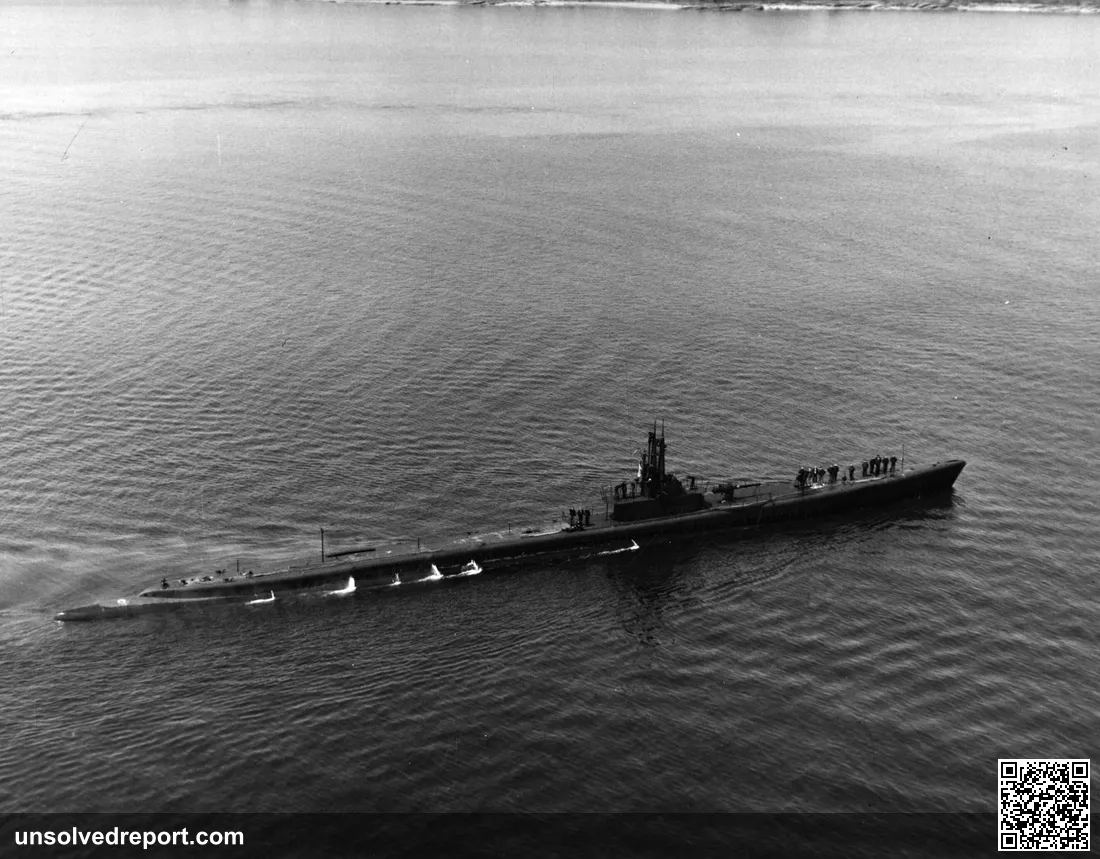
Start with the ship herself. The Awa Maru was a modern passenger-cargo liner of 11,249 gross tons, built by Mitsubishi at Nagasaki and finished in March 1943 (Wikipedia, "MV Awa Maru"). By early 1945 she'd been handed an unusual job: hauling Red Cross relief supplies to Allied prisoners of war scattered across Japanese-occupied Asia. In return for that mission of mercy, the United States gave her something almost unheard of in wartime — formal safe passage.
This wasn't a vague gentleman's agreement. It was an order, broadcast loud and clear. On March 28, 1945, Vice Admiral Charles Lockwood radioed his submarines: "LET PASS SAFELY THE AWA MARU CARRYING PRISONER OF WAR SUPPLIES. SHE WILL BE PASSING THROUGH YOUR AREA BETWEEN MARCH 30 AND APRIL 4. SHE IS LIGHTED AT NIGHT AND PLASTERED WITH WHITE CROSSES" (U.S. Naval Institute, Proceedings, "Let Pass Safely the Awa Maru," 1974). Her exact route and schedule went out again and again, in plain language anyone could read.
So how does a ship like that end up on the bottom?
The system broke at the last link. The submarine USS Queenfish (SS-393), under Commander Charles Elliott Loughlin, caught a fast surface contact in heavy fog. On radar it looked like a destroyer. Here's the gut-punch: Loughlin had never been personally briefed on the Awa Maru, and copies of those safe-conduct broadcasts had reportedly never been put in front of him (Proceedings, 1974). The Queenfish fired. The liner went down in minutes.
The human cost isn't in dispute, and it's almost unbearable. Of the 2,004 people aboard, exactly one walked away alive — a crewman named Kantora Shimoda, the captain's personal steward, fished out of the water afterward (Wikipedia). And here's the strange part: accounts say it was the third time Shimoda had been the only soul, or nearly the only soul, to survive a sinking ship.
What came next was a reckoning. The U.S. Navy court-martialed Loughlin. The board threw out the gravest charges but found him guilty of negligence — and handed down nothing more than a letter of admonition. That feather-light sentence so enraged Admiral Chester Nimitz, the convening authority, that he formally rebuked the members of the court for letting Loughlin off so easily (Proceedings, "The Treasure of the Awa Maru," 1982; UPI Archives, 1982). Japan demanded payment. On August 14, 1945 — the very day it surrendered — Tokyo put the damages at roughly 227 million yen, about $52.5 million. The bill was never paid. The matter was quietly closed in 1949 (Wikipedia).
That's the part everyone agrees on. Now comes the part that won't sit still.
The Question That Won't Die
Here's the mystery no one has been able to bury: what was actually packed into the Awa Maru's holds when she went down?
The boring answer — and boring answers are often the true ones — is industrial. The more credible sources describe her return cargo as raw materials: tin, rubber, lead, sugar, nickel. Add to that roughly 1,700 merchant seamen and around 80 first-class passengers being evacuated from Singapore back to Japan (Wikipedia). And one small detail quietly stabs the treasure legend in the heart: when Japan filed its formal damage claim, it listed loss after loss — but said nothing about gold bullion (Wikipedia; Proceedings, 1982). Think about that. A government billing the U.S. for everything it lost would have every reason to mention tons of gold — and no reason at all to hide it.
And yet. The rumors were specific. They were stubborn. They swept across Asia for decades: that a desperate Japan had stuffed the "safe" ship with looted wealth — usually pegged at 40 tons of gold, a stash of platinum, and around 150,000 carats of diamonds, echoing the same wartime looted-gold mythology that grew up around Yamashita's Gold in the Philippines. In some retellings the hoard was worth five billion dollars or more (Wikipedia; Proceedings, 1982). People took it seriously, too. In 1976 an American salvage syndicate — reportedly including former Mercury astronaut Scott Carpenter and Jon Lindbergh — went after the rights to the wreck.
Then came the move that turns this from a tall tale into a genuine puzzle.
China didn't hand over those rights. Instead, the People's Republic of China quietly found the wreck itself — reportedly in 1977 — and launched a recovery effort of staggering scale, on par with the costliest shipwreck treasure hunts in history. Over roughly five years, at a reported cost near $100 million, China sent down scores of divers and hundreds of support crew to take the hull apart piece by piece (Wikipedia; UPI Archives, 1982). And the result, by the public accounting? Human remains, returned to Japan. Some personal belongings. And no treasure.
Sit with that. If 40 tons of gold had been down there, one of the most relentless salvage operations of the age never said it found a single bar. That silence is the whole mystery in a nutshell.
So Where Did the Gold Go?
Maybe there never was any. This is the explanation that fits the paper trail best, and it's almost embarrassingly simple: the Awa Maru carried industrial raw materials, the gold story grew out of wartime whispers about plundered Asian riches, Japan's own claim named no bullion, and China's exhaustive dig turned up nothing. By this reading, the "phantom gold" was always a phantom — the same way Lake Toplitz's Nazi treasure turned out to be only half true once divers actually looked. The only act of faith it asks of you is trusting the official inventories — and it's the version the surviving evidence wears most comfortably.
Or maybe the gold sailed the other way — and got there. Some accounts pin a twist on declassified U.S. signals intelligence: that gold was in the picture, but it was being shipped from Japan to Southeast Asia earlier in the voyage, and was safely delivered before the ship was reloaded with tin and rubber for that doomed final leg home (Wikipedia, citing NSA analysis). We weren't able to read the underlying declassified study ourselves, so treat this as a reported claim, not a proven one. But if it holds up, it's elegant — it would explain both the gold rumors and the empty wreck in a single stroke.
And then there's the bone that haunts the whole thing. The most chilling legend has nothing to do with money. The fossil bones of "Peking Man" — Homo erectus pekinensis — vanished in December 1941 while being evacuated out of China, and have never resurfaced (NUMA, "Divers Seek Bones of Peking Man," 2012) — a disappearance as clean and unexplained as how Japan's own Honjo Masamune sword vanished after the war. Investigator Christopher Janus chased tips that the bones had ended up aboard the Awa Maru, and a surviving steward reportedly described trunk-like containers on the ship. Tantalizing — but it falls well short of proof, and the documented trail of those fossils points somewhere else entirely. Call it an evocative possibility. Not a finding.
What's certain is the part no theory can soften: a ship that sailed under a written promise of safety, lost with all but one soul aboard. The gold may be a ghost. The loss never was.
And those vanished bones of Peking Man? They were last seen heading for a ship — and the search for them is a mystery all its own.
Frequently Asked Questions
What actually happened to the Awa Maru?
On April 1, 1945, the U.S. submarine USS Queenfish torpedoed the Awa Maru in the Taiwan Strait despite a formal American safe-conduct guarantee, and the ship sank in minutes with 2,004 people aboard. Commander Charles Loughlin mistook the liner for a destroyer on radar and had reportedly never been briefed on the safe-passage broadcasts covering her route (U.S. Naval Institute, Proceedings, 1974).
Was there really gold on the Awa Maru?
There's no solid evidence of it. The best-documented cargo was industrial — tin, rubber, lead, sugar, nickel — and Japan's own 1945 damage claim to the U.S., which itemized every loss it wanted paid for, never mentioned gold bullion at all (Wikipedia).
Did anyone survive the sinking?
Yes, exactly one person: Kantora Shimoda, the ship captain's personal steward, who was pulled from the water afterward. Accounts describe it as the third time in his life he had been the sole, or nearly sole, survivor of a sinking ship (Wikipedia).
What happened to the submarine commander who sank her?
Commander Charles Loughlin was court-martialed; the board dropped the most serious charges but found him guilty of negligence and issued only a letter of admonition. Admiral Chester Nimitz was furious at the leniency and formally rebuked the court for it (Proceedings, "The Treasure of the Awa Maru," 1982).
Did China's salvage operation ever find the gold?
No. Between roughly 1977 and the early 1980s, China spent about five years and $100 million dismantling the wreck with scores of divers, recovering human remains and personal belongings — but no treasure was ever reported found (UPI Archives, 1982).
Were the "Peking Man" fossils really aboard the Awa Maru?
It's unproven. The Homo erectus pekinensis fossils vanished during a 1941 evacuation from China, years before the Awa Maru sailed, and investigator Christopher Janus chased tips linking them to the ship based on a surviving steward's account of trunk-like containers — but the documented trail of the fossils points elsewhere (NUMA, "Divers Seek Bones of Peking Man," 2012).
Original Data: Survival Rates in World War II's Deadliest Passenger and Prisoner-Ship Sinkings
No single source ranks the Awa Maru against the era's other mass-casualty ship sinkings by survival rate. The table below pulls the "people aboard," "survivors," and "deaths" figures each ship's own historical record publishes, then divides survivors by people aboard to calculate a survival rate for each disaster — the number that actually shows how the Awa Maru compares.
| Ship | Date sunk | People aboard | Survivors | Deaths | Survival rate (calculated) | Source |
|---|---|---|---|---|---|---|
| Awa Maru | April 1, 1945 | 2,004 | 1 | 2,003 (stated directly) | 0.05% (1 ÷ 2,004, our calculation) | Wikipedia, "MV Awa Maru"; USNI Proceedings, 1974 |
| Cap Arcona | May 3, 1945 | 5,000 (former concentration-camp inmates) | 350 | approx. 5,000 (stated directly) | 7.0% (350 ÷ 5,000, our calculation) | Wikipedia, "Cap Arcona" |
| Jun'yō Maru | September 18, 1944 | approx. 6,400–6,600 (4,200–4,300 rōmusha forced laborers + 2,200–2,300 Allied POWs) | 680 | "more than 5,000" (stated directly) | approx. 10.3%–10.6% (680 ÷ 6,400 and 680 ÷ 6,600, our calculation) | Wikipedia, "Jun'yō Maru" |
| RMS Lancastria | June 17, 1940 | disputed; estimates range from 4,000 to 9,000 | 2,477 | "no less than 3,500" (widely accepted figure, stated directly) | not calculable — the "people aboard" figure is too disputed for a reliable rate | Wikipedia, "RMS Lancastria" |
Even against other catastrophic wartime sinkings, the Awa Maru's 0.05% survival rate stands apart: it's roughly 140 times lower than Cap Arcona's 7.0% and about 200 times lower than Jun'yō Maru's estimated 10%, the only sinking in this set where fewer than one in a hundred aboard lived. The Lancastria comparison can't be reduced to a single rate at all — historians still don't agree on how many people were even on board.
How We Compiled This
- Sources. Two independent primary/secondary sources: Wikipedia's separately maintained pages for each of the four ships, and U.S. Naval Institute Proceedings (1974), a specialist naval-history publication, for the Awa Maru's passenger count.
- Definitions. "People aboard" means everyone reported embarked at the time of sinking (crew, passengers, POWs, or forced laborers, as applicable to that ship). "Survivors" and "deaths" are each ship's own reported outcome counts; where a source states deaths directly (Awa Maru, Cap Arcona, Jun'yō Maru, Lancastria), that figure is used as published rather than recalculated.
- How calculated. Survival rate = survivors ÷ people aboard, using only the two figures each source publishes for that ship. Jun'yō Maru's rate is given as a range because the source itself gives a range (4,200–4,300 rōmusha, 2,200–2,300 POWs) rather than one total.
- Limitations. These four sinkings differ in kind — a Red Cross-marked relief ship, a bombed prison-ship convoy, a POW/forced-labor transport, and a troop evacuation — so the comparison is about outcome, not identical circumstances. Cap Arcona's own source rounds both its "people aboard" and "deaths" figures to approximately the same number (5,000), which is a looseness in the source itself, not a contradiction we introduced. Lancastria's total-aboard figure remains disputed among historians (estimates span 4,000 to 9,000), which is why no rate is calculated for that row rather than forcing a number from an unreliable base.
📌 Data status: verified 2026-09-29.
Sources & Further Reading
- Wikipedia, "MV Awa Maru"
- U.S. Naval Institute, Proceedings, "Let Pass Safely the Awa Maru" (1974)
- U.S. Naval Institute, Proceedings, "The Treasure of the Awa Maru" (1982)
- UPI Archives, "Full story told of WWII sinking of the Awa Maru" (1982)
- National Underwater and Marine Agency (NUMA), "Divers Seek Bones of Peking Man" (2012)
El Carambolo Treasure: The Gold That Wasn't Supposed to Exist
3 kilos of 2,700-year-old gold under a Seville shooting club, and a lab test that demolished the Atlantis theory. A 2025 dig adds a new twist.
El Dorado: The Golden Man Nobody Can Find
El Dorado was never a city — it was a man dipped in gold dust. So why did armies die hunting the wrong myth for 400 years? The real story is stranger.

Famous Lost Treasures Still Missing: New Digs, Old Fortunes, No Gold
Fresh 2025-2026 digs are underway for the Amber Room and the Nazi gold train. Twelve famous lost treasures still missing — what's proven, what's legend.