Carnac Stones: 3,000 Megaliths That Beat Stonehenge
Over 3,000 megaliths line up across Brittany, older than Stonehenge by over 1,000 years. A 2025 dig finally dated them, but their purpose is still unknown.
Three thousand stones stand in rows across a windswept corner of southern Brittany, marching across the farmland for kilometers. They were already ancient when the first pyramid rose in Egypt. They were old before anyone dragged a single bluestone toward Stonehenge — a gap a 2025 radiocarbon study finally measured at more than a thousand years. For centuries people have walked these rows and asked the same plain question: who lined them up, and why? After more than a hundred years of digging and arguing, the honest answer is the unsettling one. We still don't really know.
> The 60-Second Brief
> - More than 3,000 granite menhirs stand in parallel rows stretching roughly 10 kilometers near Carnac, in Brittany, France.
> - The Ménec alignment alone contains about 1,099 menhirs arranged across roughly 11 rows.
> - A June 23, 2025 study in Antiquity, built on 49 radiocarbon dates, pinned the alignments to roughly 4600 to 4300 BC.
> - That makes Carnac more than 1,000 years older than Stonehenge, which rose in stages between about 3000 and 2000 BC.
> - The solitary Géant du Manio menhir stands about 6.5 meters tall.
> - On July 12, 2025, UNESCO added the site to its World Heritage List, covering more than 550 megalithic monuments.
What We Actually Know
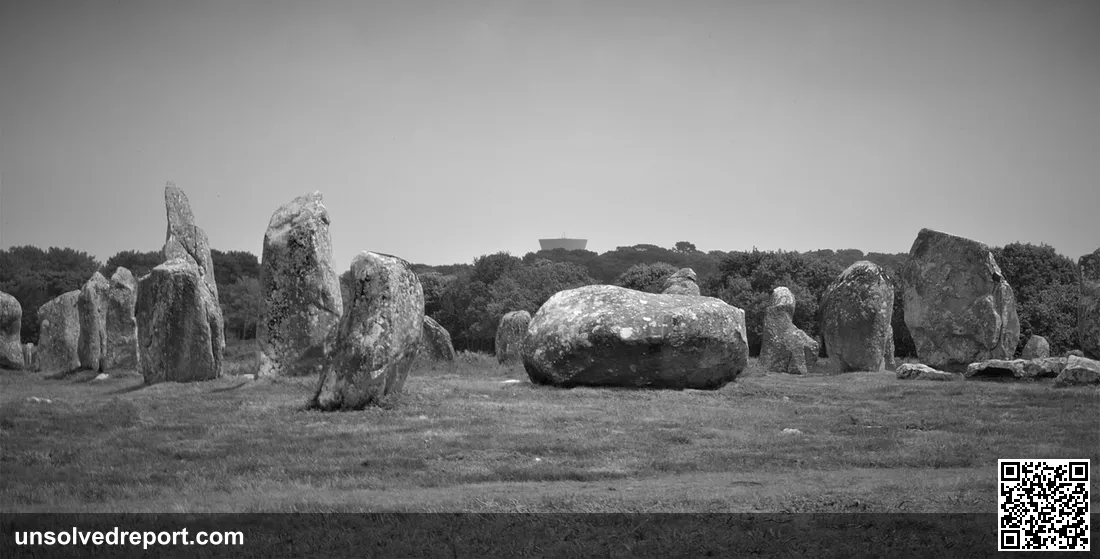
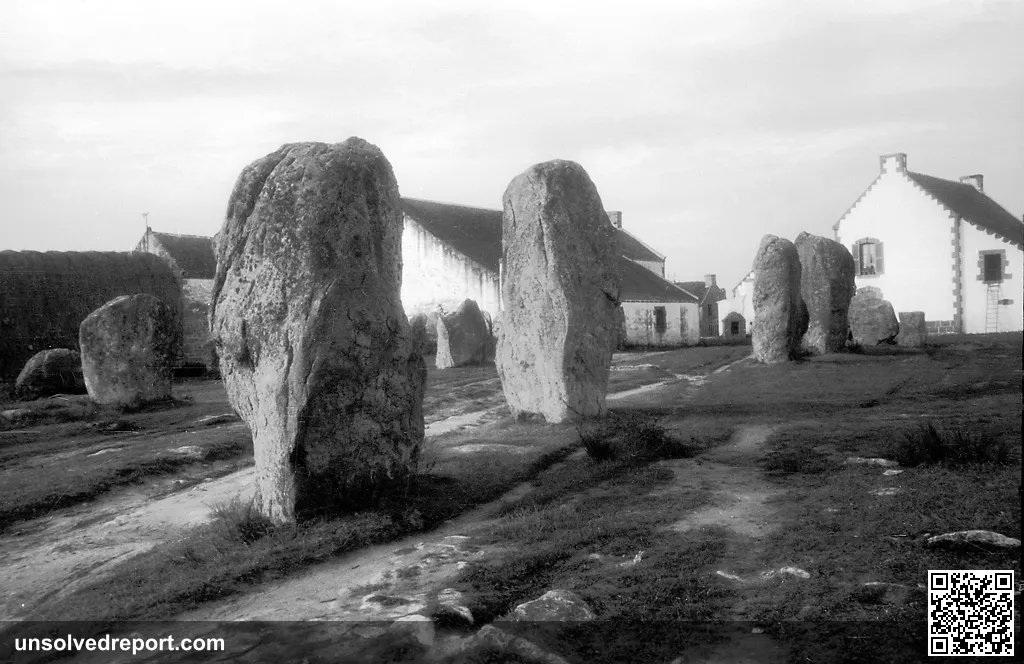
Start with the things we can measure. The Carnac stones sit near the town of Carnac on the Bay of Morbihan, in Brittany, France. There are more than 3,000 of them — standing stones called menhirs, hewn from local granite and set in long parallel rows that run for roughly 10 kilometers across the wider landscape (UNESCO World Heritage Centre). Nowhere else on Earth holds many more of these monuments in one place.
The rows fall into a handful of great alignments, and the numbers are staggering. The Ménec alignment — the famous one — packs roughly 1,099 menhirs into about 11 rows, capped at each end by stone circles called cromlechs. Walk east and you reach Kermario: close to 1,000 stones in around 10 rows, including some of the tallest on the whole site. Keep going and Kerlescan appears, some 540 stones strung across roughly 13 rows (World History Encyclopedia). And then there's the loner — the Géant du Manio, a single standing stone that towers about 6.5 meters into the Breton sky (Vueling / Brittany travel guide).
For decades, though, one number stayed stubbornly out of reach: how old. The problem is the dirt. Brittany's acidic soils chew through the organic material that archaeologists normally lean on for radiocarbon dating, so the precise age of the alignments kept slipping away. That changed on June 23, 2025, when the peer-reviewed journal Antiquity published a study by Audrey Blanchard, Jean-Noël Guyodo, Bettina Schulz Paulsson, and Fabien Montassier. Excavating a newly discovered section called Le Plasker in nearby Plouharnel, the team pulled 49 radiocarbon dates from the ground and ran them through Bayesian statistical modeling to build a high-precision timeline (Antiquity, Cambridge Core).
The verdict: the stone alignments in the Carnac region went up between roughly 4600 and 4300 BC (University of Gothenburg; Phys.org). That puts them among the earliest monumental stone structures anywhere in Europe, alongside the temples of Ġgantija in Malta. Now hold that against Stonehenge, whose famous altar stone traveled 450 miles to get there and which rose in stages between about 3000 and 2000 BC. Carnac's alignments beat it by well over a thousand years.
The dating came out of the ERC-funded NEOSEA project, led by archaeologist Bettina Schulz Paulsson at the University of Gothenburg, working with the French firm Archeodunum and the University of Nantes (Phys.org). The same dig turned up something even older and stranger: a monumental early tomb dated to roughly 4700 BC, built directly on top of the remains of an earlier Mesolithic hunter-gatherer dwelling (University of Gothenburg) — a passage-tomb tradition that, millennia later, would produce monuments as precise as Newgrange in Ireland. People living on the bones of the people who came before.
The world finally made it official on July 12, 2025, when UNESCO inscribed the "Megaliths of Carnac and of the Shores of Morbihan" on the World Heritage List. The protected property sprawls across more than 550 megalithic sites in southern Morbihan, with monuments raised over the long Neolithic stretch from roughly 5000 to 2300 BC. It's the first site in all of Brittany to earn the designation (UNESCO; France Today).
The One Question That Won't Crack
So we've nailed down the when. Here's the strange part: all that careful dating still can't tell us the why.
We know roughly when the stones went up. We know the work unfolded in stages, over about three centuries, rather than in one frantic burst (Antiquity, Cambridge Core). We know the builders were among Europe's first farming communities. But these people left no writing — not a word — and the menhirs themselves carry no inscription to explain what any of it was for.
The fresh excavations sharpen the picture without solving it. At Le Plasker, researchers found the foundation pits for the stones sitting right beside hearths and cooking areas. So fires burned here, next to the rising stones — but for what? As the Phys.org summary of the study put it, whether those fires were used "for lighting, cooking, or feasting during the erection of the stones remains unclear" (Phys.org). A precise calendar, brand-new dig data, and still the heart of Carnac stays locked. The experts are genuinely split, and they're still arguing about it (The Travel).
The Best Guesses — and the Tall Tales
The ideas below run all the way from serious archaeology to village fireside legend — the same murky territory covered by other megalithic sites nobody can fully explain. None of them is confirmed. So as we go, I'll flag exactly where each one stands.
A giant calendar in stone (hypothesis). One popular notion says the rows tracked the sun, the moon, the turning of the seasons — a tool to tell early farmers when to plant and when to reap. Some researchers have made the case for solar and lunar orientations baked into the lines. It's a real possibility, not a proven one, and plenty of archaeologists don't buy the boldest "ancient observatory" versions of the claim (Historic Mysteries).
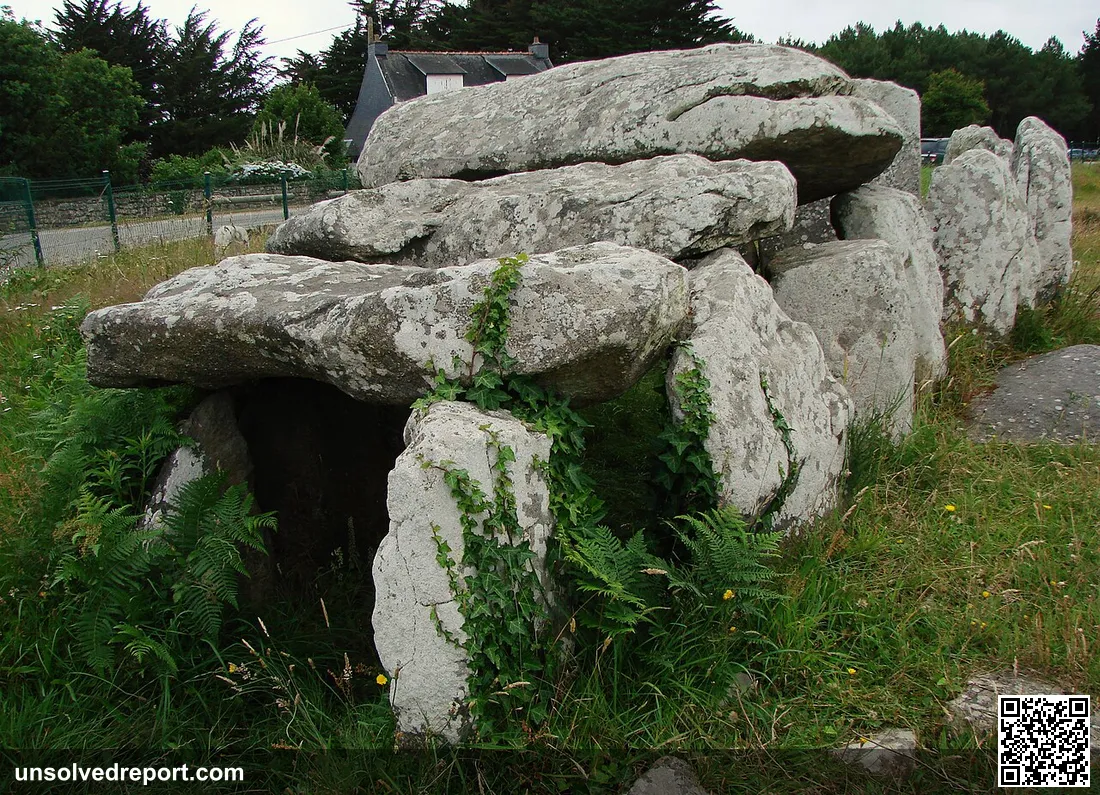
A stage for ceremony (hypothesis). Many archaeologists lean toward a ritual or communal reading. The rows might have framed processions, fenced off sacred ground, stood as memorials, or simply broadcast the togetherness of communities that kept coming back, generation after generation, to add more stones. The slow, staged, centuries-long building — plus the nearby tombs and hearths — is often pointed to as support, though the details stay open to interpretation (UNESCO; Washington Post).
Lines drawn on the land (hypothesis). Other scholars suspect the alignments marked something more practical: boundaries, routes, or seasonal meeting spots for scattered groups up and down the Morbihan coast. Plausible — but, once more, unproven.
The army turned to stone (folklore). A local Christian tale says Saint Cornély (Cornelius), fleeing a Roman army at his heels, froze his pursuers into stone — and that's why the rows stand so eerily straight. A cousin of that legend hands the credit to the wizard Merlin, who is said to have petrified a whole Roman legion (Solosophie). Lovely stories. But they sprang up thousands of years after the stones were raised. Folklore, not history.
The work of the korrigans (folklore). Another Breton tale claims the korrigans — small, fairy-like spirits — heaved the stones into place with their magic and still linger among the covered tombs (Solosophie). Charming regional legend, again, rather than anything an archaeologist would put forward.
And that gap is exactly what makes Carnac so hard to walk away from. We can finally date the stones with real confidence. We can admire the patience of a society that labored over them for three hundred years. Yet the thing we most want — the intention behind those endless rows — keeps slipping through our fingers. Three thousand stones, more than six thousand years old, are still keeping their secret. The question is whether the next spade in the ground finally makes one of them talk.
Frequently Asked Questions
How old are the Carnac stones?
A 2025 study in Antiquity, based on 49 radiocarbon dates from the newly excavated Le Plasker section, dated the stone alignments to roughly 4600 to 4300 BC. That makes them around 6,000 years old and among the earliest monumental stone structures known in Europe (Antiquity, Cambridge Core).
Are the Carnac stones older than Stonehenge?
Yes, by well over a thousand years. The Carnac alignments went up between about 4600 and 4300 BC, while Stonehenge rose in stages between roughly 3000 and 2000 BC (University of Gothenburg).
How many stones are at Carnac?
More than 3,000 menhirs survive across the site's major alignments. The Ménec alignment holds about 1,099 stones, Kermario close to 1,000, and Kerlescan roughly 540, plus the freestanding Géant du Manio (World History Encyclopedia).
What were the Carnac stones used for?
Nobody knows for certain. Leading hypotheses treat the rows as an astronomical calendar, a stage for ceremony and procession, or markers of territory and gathering routes, but excavations at Le Plasker found only hearths beside the stone foundation pits, not an explanation (Phys.org).
Where are the Carnac stones located?
They stand near the town of Carnac on the Bay of Morbihan, in Brittany, in northwestern France. The protected UNESCO property spans more than 550 megalithic sites across southern Morbihan (UNESCO World Heritage Centre).
Are the Carnac stones a UNESCO World Heritage Site?
Yes. UNESCO inscribed the "Megaliths of Carnac and of the Shores of Morbihan" on the World Heritage List on July 12, 2025, the first site in Brittany to receive the designation (France Today).
Original Data: How Carnac's New Date Stacks Up Against the World's Other Great Neolithic Monuments
No single source lines up Carnac's newly confirmed 2025 start date against the official dates published by the other great Neolithic monuments it's most often compared to. The table below compiles the earliest attested construction date each site's own managing body or research team has published, plus a "years older than Stonehenge's stone circle" figure computed from those sourced dates on a single, consistent baseline.
| Site | Location | Earliest attested date | Dating basis (per source) | Years older than Stonehenge's stone circle | Source |
|---|---|---|---|---|---|
| Carnac alignments | Brittany, France | 4600 BC | Nearly 50 radiocarbon dates with Bayesian statistical modeling | 2,100 years (4600 − 2500, our calculation) | University of Gothenburg |
| Ġgantija temples | Gozo, Malta | 3800 BC | Heritage Malta site chronology (earliest of a 3,800–2,000 BC building range) | 1,300 years (3800 − 2500, our calculation) | Heritage Malta |
| Newgrange | Boyne Valley, Ireland | 3200 BC | Official Newgrange World Heritage Site chronology | 700 years (3200 − 2500, our calculation) | Newgrange World Heritage Site |
| Stonehenge (stone circle) | Wiltshire, England | 2500 BC | English Heritage historical account | 0 (baseline) | English Heritage |
Ranked by their own sources' earliest dates, Carnac's alignments (4600 BC) predate Stonehenge's stone circle (2500 BC) by 2,100 years by our calculation, and even edge out Ġgantija's earliest building phase (3800 BC) by 800 years (4600 − 3800, our calculation); Newgrange (3200 BC) sits in between, about 700 years ahead of Stonehenge.
How We Compiled This
- Sources. Four official or primary sources, one per site: the University of Gothenburg's research announcement on the 2025 Carnac dating study, English Heritage's own history page for Stonehenge, the official Newgrange World Heritage Site, and Heritage Malta's Ġgantija temples page.
- Definitions. "Earliest attested date" is the earliest year each source itself states for that monument's construction; where a source gives a range (Carnac, Ġgantija), the earliest year in that range is used.
- How calculated. "Years older than Stonehenge's stone circle" = each site's earliest BC year minus 2500 (Stonehenge's date per English Heritage), since a larger BC number is further in the past.
- Limitations. Heritage Malta's published range for Ġgantija (3,800–2,000 BC) is unusually wide and likely spans multiple temple-building phases rather than one event, so its "years older" figure reflects only the earliest phase, not the whole range. The four monuments are different types built by different cultures — a stone alignment, a megalithic temple, a passage tomb, and a stone circle — so this table compares publication dates only, not function or construction method.
📌 Data status: verified 2026-09-29.
Sources and Further Reading
- UNESCO World Heritage Centre, "Megaliths of Carnac and of the shores of Morbihan" — https://whc.unesco.org/en/list/1725/
- Blanchard, Guyodo, Schulz Paulsson & Montassier, "Le Plasker in Plouharnel," Antiquity (June 23, 2025), Cambridge Core — https://www.cambridge.org/core/journals/antiquity/article/le-plasker-in-plouharnel-fifth-millennium-cal-bc-a-newly-discovered-section-of-the-megalithic-complex-of-carnac/153CFCB514E2FFE47AA454DB6CF766AE
- University of Gothenburg, "New light on the stone alignments in the Carnac region" — https://www.gu.se/en/news/new-light-on-the-stone-alignments-in-the-carnac-region
- Phys.org, "More precise dating shines new light on Carnac's megalithic monuments" — https://phys.org/news/2025-06-precise-dating-carnac-megalithic-monuments.html
- World History Encyclopedia, "Carnac" — https://www.worldhistory.org/Carnac/
- France Today, "Carnac Megaliths Join UNESCO World Heritage List" — https://francetoday.com/culture/carnacs-megalithic-site-joins-unesco-world-heritage-list/
- The Washington Post, "In France, a prehistoric site to rival Stonehenge" — https://www.washingtonpost.com/travel/2022/01/21/brittany-france-prehistory-carnac-alignments/
- Solosophie, "Carnac Stones: A Neolithic Site in Windswept Brittany" (folklore) — https://www.solosophie.com/carnac-stones/

Derinkuyu: The 18-Level City a Sledgehammer Found by Accident
A Turkish man smashes a basement wall and cold air pours from the rock: a city plunging 85m down, built to hide 20,000 people. Who really carved Derinkuyu?
10 Unexplained Ancient Artifacts Scientists Still Can't Fully Solve
Real, cataloged, unsolved ancient artifacts — a 2,000-year-old geared computer, a color-shifting Roman cup, a disc no one can read — plus a new 2025 study on why the tech might have failed.
Cochno Stone: Scotland Buried It on Purpose. Twice.
Scotland deliberately buried the Cochno Stone in 1965, briefly dug it up in 2016, then reburied it. What do its 90 carved rings actually mean?