12 Lost Treasures the World Has Never Found
A king's jewels eaten by the tide. A room of amber that blinked out of history. Twelve real fortunes that left a paper trail, then simply vanished.
Some treasures slip away quietly, like a coin sliding behind a couch cushion. Others get swallowed whole — by a war, by a storm at sea, by a single secret a dying man carried to his grave. The dozen cases below are not campfire stories made of smoke. Every one is bolted to something real: a shipment written into a ledger. A museum inventory. A witness who lived to tell. A coded note in a dead man's pocket.
Here's what gets under your skin. It's the gap. We know the gold sailed out of the harbor — we just can't say where it sank to rest. We know the room of amber was real, photographed and gawked at by thousands — we just don't know where the panels went.
These treasures have outlived the people who hid them and the searchers who burned through their whole lives chasing them. Some might be sitting a few feet under dirt that thousands of feet have walked across without a clue. Others may be gone for good — melted, scattered, erased. But the gold was never really the point. The point is the puzzle. That maddening, almost-solvable itch that the answer is right there, just past your fingertips. And the list below isn't frozen — in November 2025, one of these very cases moved for the first time in three centuries, when Colombia pulled the first confirmed artifacts off the seafloor. Here are twelve of the most documented, most fought-over, most genuinely open treasure mysteries still waiting for someone to crack them.
> The 60-Second Brief
> - The Amber Room's roughly six tonnes of carved amber panels vanished after Nazi forces stripped them from the Catherine Palace during World War II, last reliably placed in Königsberg before the city was bombed and overrun in 1945 (Smithsonian Magazine).
> - The Portuguese carrack Flor de la Mar sank off Sumatra on 20 November 1511, taking plunder from the conquest of Malacca — now estimated at up to $2.6 billion in today's value — to the bottom; no wreck has ever been confirmed (Wikipedia).
> - The Spanish galleon San José sank off Cartagena in 1708 and rests roughly 2,000 feet below the Caribbean; Colombia recovered its first artifacts — a cannon, three coins, and a porcelain cup — in November 2025 (CBS News).
> - Thieves made off with $5.8 million in cash and jewelry in the Lufthansa heist at JFK Airport on December 11, 1978, and the bulk of it has never been recovered (HISTORY).
> - Oak Island's "Money Pit" has drawn searchers since a 1795 discovery by teenager Daniel McGinnis — more than 230 years of digging without confirmed treasure (HISTORY).
> - England's King John reportedly lost his crown jewels to the tide near The Wash on 12 October 1216 — more than 800 years ago — and in 2024 a Norfolk archaeological society launched a fresh LiDAR search for the site (Archaeology News Online Magazine).
1. The room made of amber that simply blinked out
Imagine standing inside a room that glows like honey in candlelight — every wall carved amber, gold leaf, and mirrors throwing the light back at you. That was the Amber Room, gifted to Russia in the 18th century and installed near St. Petersburg. Then the Nazis came. During World War II, German forces pried the room apart panel by panel and hauled it off, and the last solid record places it in Königsberg (now Kaliningrad) — right before the city was bombed flat and overrun.
And then? Nothing. The panels dropped clean out of history. Burned to ash in the chaos? Sealed up in a mine or a bunker? Quietly chopped into pieces and sold off? Decades of searching and a fortune spent building a full-scale replica still can't tell us where the real one went.
2. The Portuguese ship that sank with a king's fortune
In 1511, a Portuguese carrack called the Flor de la Mar went down in a storm near Sumatra. On board, by the accounts of the time: one of the most jaw-dropping hauls of plunder ever crammed into a single hull — gold, jewels, and riches scooped up from the conquest of Malacca, all bound for the Portuguese crown.
The waters were shallow but vicious. Now here's the strange part. With all our modern expeditions, with all the rival salvage crews who swear they've nailed the spot — nobody has confirmed a verified wreck site. Where it lies, and whether that legendary cargo even matches what the old paperwork claims, is still anyone's guess.
3. The treasure handed to the wrong captain
The year is 1820. The wars of independence are closing in on Lima, and Spanish authorities make a desperate move. They reportedly load a vast hoard of church and civic treasure onto the ship of a British trader named Captain William Thompson — and trust him to keep it safe.
Big mistake. As the long-told story goes, Thompson and his crew took one look at all that gold and simply… kept it. They sailed off and allegedly buried the lot on Cocos Island, off Costa Rica. More than a hundred years of expeditions have crawled across that island since. The result? Nothing solid. Whether the treasure is really buried there, got scattered, or was never as huge as the legend swears — nobody knows.
4. The richest shipwreck on Earth, still sitting on the seabed
Cartagena, Colombia, 1708. The Spanish galleon San José is blown apart in a battle with British ships and goes down. Its cargo of coins, gold, and precious goods is often called one of the richest losses the sea has ever taken.
Now the twist that sets this one apart from everything else on the list: the wreck has actually been found — confirmed by its unmistakable cannons and porcelain resting roughly 2,000 feet down. In November 2025, Colombia's culture ministry announced the first confirmed recovery: a cannon, three coins, and a porcelain cup, brought up for conservation (CBS News). So why is the rest still down there? Because a fierce legal fight over who owns the wreck — Colombia, Spain, and a US salvage company all have claims — has kept most of the cargo exactly where it sank. What the full haul really holds, and whose name belongs on the legal claim, is still being decided.
5. The mine a dying man swore was real
Somewhere in the jagged Superstition Mountains of Arizona, there's supposed to be a gold deposit so rich it has lured people to their deaths. They call it the Lost Dutchman's Mine, and it's tied to a 19th-century German immigrant prospector named Jacob Waltz.
On his deathbed in the early 1890s, Waltz reportedly described a fabulously rich claim — and left behind a scatter of clues that have hooked searchers ever since. Generation after generation has hiked into that brutal range chasing it. Some never came back out. Was Waltz's mine real, wildly exaggerated, or just tangled up with some other gold source? More than a century later, the question has never been put to rest.
6. The jeweled eggs that vanished into a revolution
Before 1917, the Russian imperial family commissioned a run of jeweled Fabergé Easter eggs — tiny masterpieces of gold, enamel, and gemstones, the kind of thing emperors hand to one another. Then the revolution swept it all away. The collection scattered to the winds: some eggs sold off abroad, others lost in the upheaval.
And a handful? Simply unaccounted for. We know they existed — there are photographs, there are inventory lists — but no living eye has seen them since. Were the missing eggs destroyed? Hidden? Or are they sitting unrecognized on some private shelf right now, dusted off once a year by someone who has no idea? Collectors are still hunting.
7. The vanished gold of a collapsing nation
It's 1865, and the Confederacy is falling apart. As officials flee, they load the Confederate treasury — gold and silver coin and bullion — onto rail cars and wagons and send it south. Records and witnesses trail the convoy for part of its run. Then the trail shatters into a tangle of competing tales: payments here, thefts there, secret caches everywhere.
Some of it was accounted for. But a meaningful chunk, by various accounts, was never officially recovered. How much truly vanished, and where any of it finally came to rest, has sent treasure hunters digging across the South for over a century. They still haven't stopped.
8. The pit that drinks excavators alive
Late 1700s, Oak Island, Nova Scotia. Someone notices a strange depression in the ground. That one flicker of curiosity kicked off one of the longest treasure hunts in history — into a shaft that came to be called the "Money Pit," a hole that floods and fights back every single time anyone tries to dig it out.
Over two centuries, searchers have pulled up scattered artifacts and reported eerie layers of worked material buried deep below. The theories run wild: pirate loot, hidden documents, even a plain old natural sinkhole that's been fooling everyone for 200 years. Despite staggering effort and every modern machine thrown at it, no treasure and no definitive answer has ever been confirmed.
9. The crown jewels the sea swallowed
The year is 1216. England's King John is crossing near a marshy estuary in the east of the country called The Wash. According to the chroniclers, his baggage train — reportedly carrying crown jewels and royal regalia — gets caught by the incoming tide and sucked down into quicksand and water.
Days later, the king himself was dead, which only thickened the drama. And the coastline? It has shifted dramatically over eight centuries, so even pinning down where to look is its own nightmare. Whether the jewels really sank the way the stories say, or the whole loss got puffed up after the fact, the regalia has never surfaced. In 2024, the West Norfolk and King's Lynn Archaeological Society used LiDAR surveys to hunt for promising sites in the fenlands near Walpole Marsh — though its own chairman put the odds of success at "a million to one" (Archaeology News Online Magazine).
10. The airport heist that swallowed millions
1978, JFK Airport, New York. Thieves walk off with a huge load of cash and jewelry from a Lufthansa cargo area — one of the biggest robberies in American history at the time. Investigators worked the case for years; later prosecutions documented the crime and named suspects.
So where's the money? That's the thing — the vast majority of it was never recovered. Where it went, who held it, how it got spent or hidden — all of it stays officially unresolved. This is the rare treasure on the list that disappeared not centuries ago, but within living memory. Someone out there might remember exactly what happened.
11. The Nazi train that may not exist
The story refuses to die. In the last desperate days of World War II, a German military train was supposedly loaded with valuables and sealed inside a tunnel or mine in Lower Silesia — a region now part of Poland.
A few years back, researchers wielding ground-penetrating radar announced a promising anomaly underground, and the world went a little crazy: headlines, international attention, excavation crews descending on the site. Then they dug. And the publicized spot turned up no treasure train at all. Did such a train ever roll? Does it lie somewhere else, still buried? The argument is far from over.
12. The yellow diamond that walked out of history
The Florentine Diamond was a big, distinctively cut yellow stone with a long, documented life among European royalty, bound for ages to the Habsburg dynasty. Then World War I ended, the Austro-Hungarian monarchy crumbled, the family went into exile — and somewhere in the scattering of their belongings, the famous diamond slipped right out of the public record.
Some accounts whisper it was carried abroad, maybe recut, maybe sold under a brand-new identity so no one would ever recognize it. Where it is now — and whether it even survives in one piece — has never been confirmed. It could be glittering on a finger somewhere this very moment, and not a soul would know.
---
Every one of these stands on solid ground: a sunken hull logged in a manifest, a museum panel photographed before it vanished, a convoy tracked partway down a railway line and then nowhere. The mystery was never whether the treasure existed — it's where the trail went cold. And that gap is exactly the thing that keeps searchers, historians, and the merely curious circling back, year after year. Some of these puzzles may crack open with the next sonar sweep, or the next dusty file pulled from an archive. Others may just keep their secrets for one more generation.
If one of these grabbed you and won't let go, follow it deeper into its own case file — and see just how close the searchers have really come.
How these twelve cases actually break down
Line them up and a pattern emerges: these aren't twelve versions of the same mystery. They fail in different places. For some, we don't even know the treasure was real; for others, we know exactly where it is and simply can't get to it. The table sorts each case by where its trail actually went cold — because that gap, not the gold, is the real subject of every entry above.
| Treasure | The core unsolved question | Where the trail went cold |
|---|---|---|
| Amber Room | Where did the dismantled panels go after Königsberg? | Existence proven (photographed); location lost in the wartime bombing |
| Flor de la Mar | Is there a verified wreck, and did the cargo match the paperwork? | Loss documented; no confirmed wreck site despite rival salvage claims |
| Cocos Island (Lima) treasure | Was the hoard ever really buried there — or at all? | The handoff is a "long-told story"; a century of digs found nothing solid |
| San José | Who legally owns it and what the full cargo holds | Wreck found and confirmed; an ownership fight froze recovery |
| Lost Dutchman's Mine | Was Waltz's rich claim real or exaggerated? | A deathbed account and scattered clues; never independently verified |
| Missing Fabergé eggs | Were the unaccounted-for eggs destroyed, hidden, or unrecognized? | Existence proven (photos, inventories); unseen since the revolution |
| Confederate treasury | How much vanished, and where did it settle? | Convoy tracked partway, then splinters into competing accounts |
| Oak Island Money Pit | Is there treasure at all, or just a flooding natural sinkhole? | Two centuries of digging; no treasure and no definitive answer confirmed |
| King John's regalia (The Wash) | Did the jewels truly sink — and if so, where? | Chronicled loss, possibly exaggerated; a shifted coastline hides the spot |
| Lufthansa heist | Where did the money go after the robbery? | Crime documented and prosecuted; the bulk of the cash never recovered |
| Nazi gold train | Did the train ever exist, and does it lie elsewhere? | A radar anomaly was dug — and turned up no train |
| Florentine Diamond | Does the stone survive intact, and under what identity? | Documented for centuries; slipped out of record during the Habsburg exile |
Read across the middle column and three distinct kinds of mystery fall out. A few of these are barely mysteries of location at all — the San José sits identified on the seabed, held hostage by a legal claim rather than the sea, which makes it the closest thing here to "solved." A second group is haunted by a harder doubt: whether the treasure was ever real. The Cocos Island hoard, the Lost Dutchman's Mine, and the Oak Island pit all rest on a single story or an ambiguous hole in the ground, and two-plus centuries of searching have produced nothing to confirm the prize exists. And a third group — the Amber Room, the missing Fabergé eggs, the Florentine Diamond — is the cruelest, because these are proven treasures, photographed or inventoried, that a war or a revolution swallowed whole; here the only question is where they landed. The pattern worth noticing: the cases most likely to stay open forever aren't the ones lost longest ago, but the ones where we can't even agree the treasure was there to lose.
2025: Colombia raised the first pieces of the San José
For three centuries, "found but unresolved" was as close as anyone got to solving the San José. That changed in November 2025, when Colombia's culture ministry announced its research team had brought up the first confirmed artifacts from the wreck: a cannon, three coins, and a porcelain cup, recovered from roughly 2,000 feet down and sent to a dedicated conservation lab (CBS News). Officials were careful to frame the expedition as scientific research into the wreck itself, not a treasure grab — the ownership fight between Colombia, Spain, and a US salvage company is still very much unresolved. But after 300 years, it's the first time anything has actually moved.
Frequently Asked Questions
Has any of the treasure on this list actually been found?
Only one, and only partly. The Spanish galleon San José was located and confirmed off Cartagena, Colombia, and in November 2025 researchers recovered their first artifacts — a cannon, three coins, and a porcelain cup — from the wreck. Most of its cargo remains on the seabed while a legal dispute over ownership continues (CBS News).
What happened to the Amber Room?
It was looted panel by panel from Russia's Catherine Palace by Nazi forces during World War II and last reliably documented in Königsberg before the city was destroyed in 1945. No confirmed remnant of the original amber panels has ever been found since (Smithsonian Magazine).
Has the San José shipwreck's treasure been recovered?
Only a small first batch. Colombia's culture ministry announced in November 2025 that its team had raised a cannon, three coins, and a porcelain cup from the wreck, which rests roughly 2,000 feet deep. The bulk of the estimated cargo — reportedly worth billions of dollars — is still on the seafloor, held up by an unresolved ownership dispute between Colombia, Spain, and a US salvage company (CBS News).
Was the money from the 1978 Lufthansa heist ever found?
No. Thieves took $5.8 million in cash and jewelry from a Lufthansa cargo building at JFK Airport on December 11, 1978, and authorities never recovered any of it, despite a decades-long investigation and a trail of related murders (HISTORY).
Is there really treasure buried in Oak Island's Money Pit?
Nobody has ever confirmed it. Searchers have dug into the pit since Daniel McGinnis first noticed the depression in 1795, and over more than two centuries they've found wooden platforms and scattered artifacts, but no verified treasure and no definitive explanation — including the possibility it's a natural sinkhole (HISTORY).
Are people still searching for King John's lost crown jewels?
Yes. In 2024, the West Norfolk and King's Lynn Archaeological Society used LiDAR surveys to search the fenlands near Walpole Marsh for the spot where the jewels supposedly sank in 1216, though the group's own chairman rated the odds of success at "a million to one" (Archaeology News Online Magazine).
Original Data: How Long Each Treasure Has Been Missing, and What It Was Worth
The article above sorts these twelve cases by why they're unsolved. No single source, though, lines up how long each has actually been missing against how much it was worth when it disappeared. The table below compiles the last-documented year and the best published value estimate for six of the twelve cases — the ones with a specific, sourced dollar figure or a clear disappearance date — and calculates how many years each has been missing as of 2026.
| Treasure | Last Documented / Lost | Years Missing (our calculation, as of 2026) | Estimated Value | Source |
|---|---|---|---|---|
| King John's crown jewels (The Wash) | 1216 | 810 years (2026 − 1216, our calculation) | not published | Archaeology News Online Magazine |
| Flor de la Mar treasure | 1511 (ship sank) | 515 years (2026 − 1511, our calculation) | $2.6 billion | The Daily Beast |
| Oak Island Money Pit | 1795 (first noticed) | 231 years (2026 − 1795, our calculation) | not published — no treasure confirmed | HISTORY |
| San José cargo | 1708 (ship sank) | 318 years (2026 − 1708, our calculation) | "billions of dollars" (no specific figure published) | CBS News |
| Amber Room | 1944 (last reliably seen in Königsberg before allied bombing) | 82 years (2026 − 1944, our calculation) | $142 million (in today's dollars, per source) | Smithsonian Magazine |
| Lufthansa heist cash and jewelry | 1978 | 48 years (2026 − 1978, our calculation) | $5.8 million (nominal 1978 dollars, not inflation-adjusted) | HISTORY |
Sorted by time missing, the six span nearly the entire documented history of lost treasure — from crown jewels that vanished eight centuries ago with no surviving value estimate at all, to a 1978 airport heist with an exact dollar figure but less than half a century of searching behind it. The two biggest dollar estimates, Flor de la Mar's $2.6 billion and the San José's unspecified "billions," both come from ships lost centuries apart (1511 and 1708) in the same general era of transoceanic treasure fleets. King John's jewels and the Money Pit are the only two of the six with no published value at all — but they aren't the two longest-missing cases here: at 810 years, King John's jewels are the longest-missing by far, while the Money Pit, missing 231 years, actually ranks behind both Flor de la Mar (515 years) and the San José (318 years), which do have value estimates.
How We Compiled This
- Sources. Archaeology News Online Magazine (King John's jewels), The Daily Beast (Flor de la Mar valuation, cited via a Wikipedia reference), HISTORY (Oak Island and the Lufthansa heist), CBS News (San José), and Smithsonian Magazine (Amber Room) — five separate outlets already used or referenced across this article and its linked case files.
- Definitions. "Last Documented / Lost" is the year each source itself assigns to the disappearance or sinking, not a later search or discovery date (so the Amber Room uses 1944, when Smithsonian says the trail was lost after allied bombing, not 1945). "Estimated Value" is only filled in where a source states a specific figure; the San José's cargo is described only as worth "billions of dollars" with no number attached, so it is recorded as such rather than assigned a figure.
- How calculated. Years missing = 2026 − last documented year. King John: 2026 − 1216 = 810. Flor de la Mar: 2026 − 1511 = 515. Oak Island: 2026 − 1795 = 231. San José: 2026 − 1708 = 318. Amber Room: 2026 − 1944 = 82. Lufthansa: 2026 − 1978 = 48.
- Limitations. The six value estimates are not on equal footing: the Amber Room's $142 million and Flor de la Mar's $2.6 billion are both described as modern-dollar estimates made by historians long after the loss, the Lufthansa figure is the original 1978 face value with no inflation adjustment, and the San José has no published number at all. Comparing them side by side shows scale, not a currency-adjusted ranking. The Amber Room's 1944 date reflects when Smithsonian says the room was last documented before Königsberg's bombing; this article's own brief instead describes the city as "bombed and overrun in 1945," which refers to the later Soviet capture of the city rather than the 1944 bombing raid Smithsonian cites — both dates are accurate to what each event describes, but they are not the same event.
📌 Data status: verified 2026-09-29.
Sources & further reading
- Smithsonian Magazine, "A Brief History of the Amber Room" — https://www.smithsonianmag.com/history/a-brief-history-of-the-amber-room-160940121/
- Wikipedia, "Flor de la Mar" — https://en.wikipedia.org/wiki/Flor_de_la_Mar
- CBS News, "Coins, cannon recovered from legendary ship that sank 3 centuries ago with billions of dollars in treasure" — https://www.cbsnews.com/news/san-jose-shipwreck-treasure-recovered-1708-colombia/
- HISTORY, "How the 1978 Lufthansa Heist Led to a Trail of Dead Bodies" — https://www.history.com/articles/1978-lufthansa-heist-jfk-henry-hill-goodfellas
- HISTORY, "What Is the Oak Island Money Pit?" — https://www.history.com/shows/the-curse-of-oak-island/articles/what-is-the-money-pit
- Archaeology News Online Magazine, "Archaeologists search for King John's lost treasure after 800 years" (March 2024) — https://archaeologymag.com/2024/03/archaeologists-search-for-king-johns-lost-treasure/


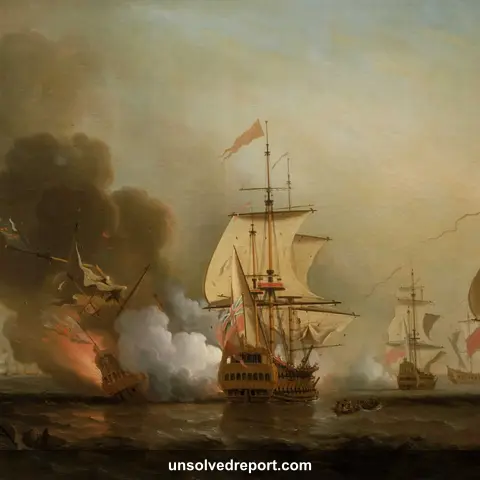
The San Jose Galleon: The Billion-Dollar Wreck Nobody Can Claim
The San Jose galleon sank in 1708 loaded with gold and emeralds nobody has recovered. Four rivals are now fighting over it — here's fact vs. hype.
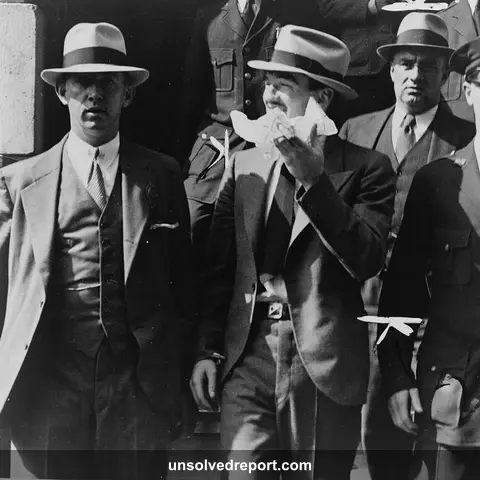
Dutch Schultz Treasure: $7M Buried in the Catskills, Never Found
A gangster buried $7 million in cash and diamonds in the Catskills in 1935 and died before he could say where. Ninety years on, it's still down there.

Amber Room: Poland Dug a New Search Site — and Found a Tank
Looted in 36 hours in 1941, worth up to $500M, officially burned in 1945 — yet in 2025 Poland granted a new dig permit. Where does the Amber Room stand now?