The Dancing Plague of 1518: 400 Danced, No One Could Stop
In July 1518, one woman's dancing spread to 400 people in Strasbourg who couldn't stop. The records are real — so why has no one ever explained why?
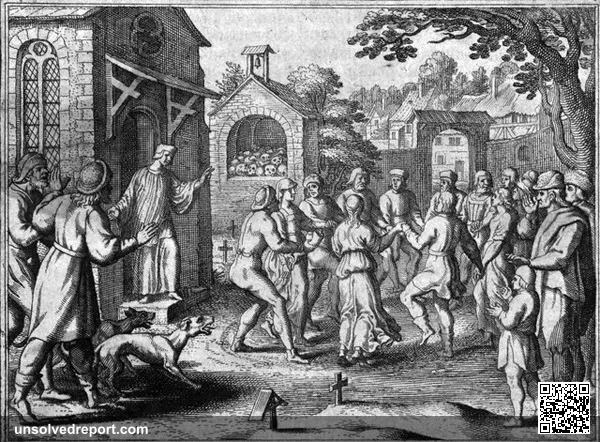
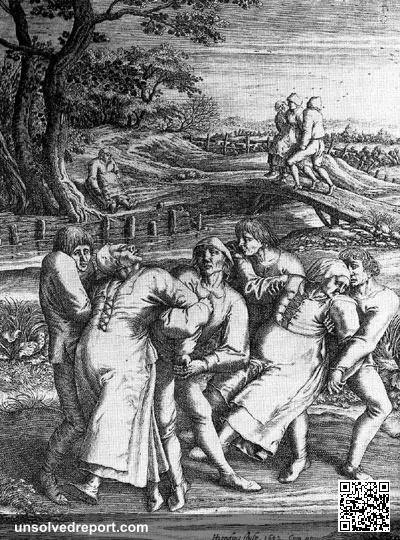
A woman steps into a narrow cobbled street in Strasbourg. It is July 1518, the heat is brutal, and she begins to dance. No music plays. No festival is happening. There is no reason anyone can see. She dances all day, into the night, and when her body finally gives out and she crumples to the ground, she gets back up and dances again. Within a week, dozens of her neighbors are doing the same thing. Within a month, as many as 400 people are trapped in the same compulsion, and not one of them can stop.
Here is the strange part: this isn't a folk legend dressed up to look like history. The dancing plague of 1518 is one of the best-documented bizarre events of the early modern era — physicians wrote it down, city officials wrote it down, chroniclers wrote it down. And five centuries later, nobody can tell you for sure what caused it.
> The 60-Second Brief
> - July 1518: a woman remembered as Frau Troffea starts dancing in a Strasbourg street. The often-quoted start date of July 14 comes from later compilations, not an eyewitness diary.
> - Within about a week, more than 30 other people had been pulled into the same uncontrollable dancing.
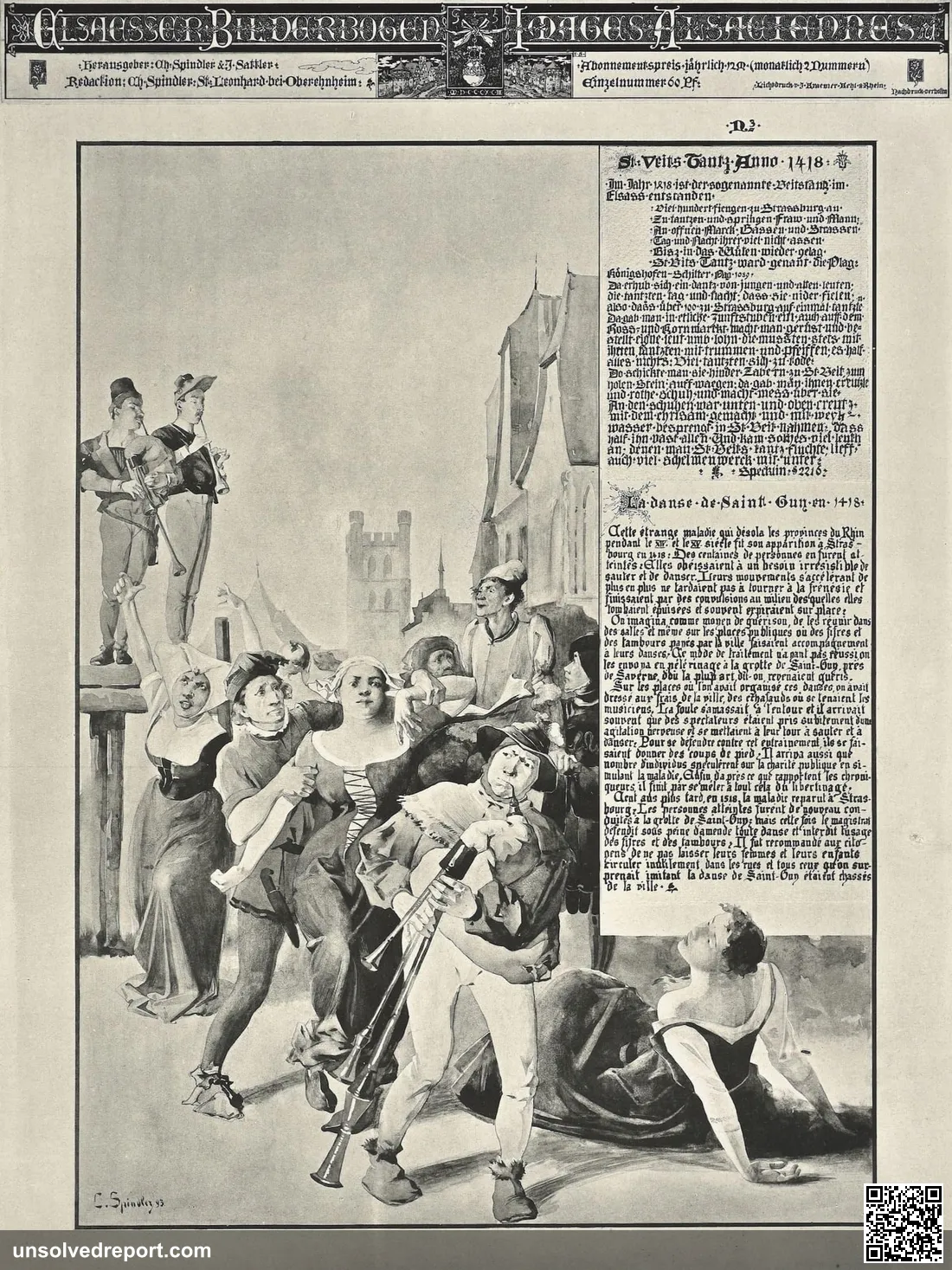
> - By August, as many as 400 citizens were afflicted. The council's first response was guildhalls, hired musicians and strong dancers to keep them moving, and it made things worse.
> - In September 1518, the remaining dancers were taken on a pilgrimage to a shrine of Saint Vitus near Saverne, and the outbreak faded away.
> - The famous "15 deaths a day" figure comes from later retellings. The 1518 Strasbourg records give no death toll and don't confirm a single fatality.
> - 2009: medical historian John Waller's A Time to Dance, a Time to Die set out the leading explanation, mass psychogenic illness, which is still a theory and not a proven cause.
What Actually Happened
Most medieval-era weirdness comes to us through rumor and a few foggy lines in a chronicle — think of the Green Children of Woolpit, a stranger case built on far thinner records. This is different. The episode survives across a stack of contemporary records — physician notes, cathedral sermons, regional chronicles, and notes issued by the Strasbourg city council itself, as the Encyclopaedia Britannica lays out (Britannica; Wikipedia summary of sources). That paper trail is exactly what sets 1518 apart from the vaguer "dancing mania" stories scattered around medieval Europe.
The first dancer has a name. Tradition calls her Frau Troffea, and she started dancing in the street outside her home in July 1518 (History). You'll often see the date pinned to July 14 — but treat that with a little care. According to the Public Domain Review's walk through the chronicles, that exact day comes from later compilations, not from a single eyewitness diary entry (Public Domain Review).
What came next, the major sources all agree on. Inside about a week, more than 30 other people had been pulled into the same uncontrollable dancing. By August, the number had ballooned to as many as 400 afflicted citizens (Britannica; History). And this was no party. The accounts that trace back to eyewitnesses describe people in obvious distress — crying out, begging for help, and dancing on anyway, as if their legs belonged to someone else.
The "cure" that poured gasoline on the fire
Now for the detail that sounds invented but isn't. Faced with a street full of people dancing themselves ragged, the Strasbourg authorities decided the answer was more dancing. They set aside guildhalls for the afflicted, hired musicians to keep time, and even brought in strong, healthy dancers to keep the sufferers on their feet, as Britannica records (Britannica). You can probably guess how that went. The plan backfired, badly, and seems to have spread the thing even further (National Geographic).
When that disaster became impossible to ignore, the council flipped its whole strategy and banned public dancing and music. By September, the dancers still standing were reportedly marched on a pilgrimage to a shrine of Saint Vitus — the saint linked to dancing afflictions — up in the hills near Saverne (Public Domain Review; Wikipedia). And then, as suddenly and quietly as it had arrived, the whole episode faded away.
The Two Questions Nobody Can Close
Two riddles are still genuinely open here, and it pays to keep them apart, because people constantly mash them together.
The first: did anyone actually die — and if so, how many? You'll hear, again and again, that at the peak some 15 people dropped dead every single day from strokes, heart attacks, or pure exhaustion. It's a gripping number. It's also where the evidence goes thin fast. As several sources point out, the contemporary Strasbourg records don't actually give a death toll, and no surviving source from the time of the events confirms any fatalities at all (Wikipedia). That dramatic "fifteen a day" line traces to later retellings, not to the 1518 documents themselves (Public Domain Review). So hold the image of hundreds dancing to their graves at arm's length. The exhausting, days-long dancing is solid. The body count is not.
The second question is bigger, and it's the one that won't let go: why did it happen at all? The dancing is real and on the record. The cause is a blank. No single explanation has ever been confirmed — which is exactly why historians and physicians are still circling it, the way researchers still circle the Taos Hum, a modern case with the same shape: a documented effect, no agreed-upon cause.
So What Was Going On?
Everything past this point is informed speculation. None of it is settled fact. Each idea is a scholar trying to match the documented behavior to a mechanism we already understand.
The leading idea: a city's mind breaking together
This is the front-runner, but it's still speculation. American medical historian John Waller, whose work is the standard modern reference, reads the outbreak as a form of mass psychogenic illness — the same category of collective phenomenon some researchers point to in cases like the Mothman sightings — what older books bluntly called "mass hysteria" (Britannica). Picture the backdrop. Strasbourg in 1518 was a city stretched to its limit: recent famines, plus diseases like smallpox and syphilis, had ground the population down to a psychological breaking point (Britannica). Into that powder keg dropped a single combustible belief — that an angry Saint Vitus could curse sinners with dancing they couldn't control. Waller's argument is that with enough shared dread and a firm shared expectation, that fear could turn self-fulfilling, jumping from person to person by suggestion (National Geographic). Later scholars have pushed the idea further, reading the dancing as a collective trauma response in a community hammered by floods, famine, and disease (National Geographic).
The poisoned-bread theory
Tidy, biological, and mostly set aside by today's scholars. In the 20th century, investigators floated the idea that the dancers had eaten rye bread laced with ergot, a fungus that brews up compounds related to LSD and can trigger convulsions and hallucinations (Britannica). Neat story — until you poke it. Waller and others point out that ergotism usually chokes off blood flow to the limbs, which makes sustained, days-long dancing physically implausible, and that the contemporary accounts are missing the gangrene and blackened extremities ergot poisoning tends to leave behind (National Geographic; Wikipedia).
The secret-sect theory
A minority view, and also speculation. Sociologist Robert Bartholomew has suggested the dancers might have been members of a fringe religious group performing ecstatic dance to win divine favor (Britannica). Most historians find it less convincing than the stress-and-suggestion model — mainly because the chronicles paint the sufferers as anguished, not worshipful.
What the people of 1518 thought
They had their own answers, and the sources preserve them: divine punishment, demonic possession, and the medical notion of "overheated blood" (Britannica; Wikipedia). These tell us less about the real cause than about how a terrified community reached for any handle it could find on something utterly beyond its control.
Why It Still Haunts Us
The dancing plague of 1518 sticks with us because it lands on a rare crossroads: the what is documented, and the why is honestly unknown. Hundreds of real people, in a real city, did something inexplicable and exhausting for weeks on end — and the sharpest minds studying it still hedge their conclusions. That gap, between a solid record and a question no one can answer, is the whole eerie heart of it. And if a shared belief could set a city dancing until it dropped, you have to wonder what else a crowd's mind can do when the pressure builds with nowhere to go.
Frequently Asked Questions
What was the dancing plague of 1518?
It was an outbreak of uncontrollable, days-long dancing in Strasbourg that began in July 1518, when a woman known as Frau Troffea started dancing in the street outside her home. Within about a week more than 30 people had joined her, and by August as many as 400 were affected. It ended in September after the remaining dancers were taken to a shrine of Saint Vitus (HISTORY).
Did the dancing plague really happen?
Yes. It is one of the best-documented strange events of the period, recorded in physician notes, cathedral sermons, regional chronicles and notes issued by the Strasbourg city council. Some details, such as the exact start date of July 14, come from later compilations rather than eyewitness accounts (Public Domain Review).
How many people died in the dancing plague of 1518?
Nobody knows, and it's possible nobody died. The claim that around 15 people a day dropped dead at the peak comes from later retellings. The Strasbourg sources from the time don't give a number of deaths or say whether there were any fatalities (Wikipedia).
What caused the dancing plague?
No cause has ever been confirmed. The leading explanation, from medical historian John Waller, is mass psychogenic illness: a population worn down by famine and disease, and afraid that Saint Vitus could curse sinners with compulsive dancing, turned that fear into the dancing itself (Britannica).
Was the dancing plague caused by ergot poisoning?
Probably not. Ergot, a fungus that grows on rye, can cause convulsions and hallucinations, but it usually restricts blood flow to the limbs. That makes days of sustained dancing unlikely, and the accounts don't mention the gangrene that ergot poisoning tends to leave behind (National Geographic).
How did the Strasbourg authorities try to stop it?
At first they encouraged it. The council gave the dancers guildhalls, hired musicians and brought in healthy dancers to keep them on their feet, which seems to have spread the outbreak further. The council then banned public dancing and music, and in September sent the remaining dancers on a pilgrimage to a shrine of Saint Vitus near Saverne (Wikipedia).
Original Data: How the 1518 Outbreak Compares to Other Recorded Dancing Manias
Strasbourg's 400 dancers is the number most people know, but Wikipedia's broader catalog of dancing-mania outbreaks records at least three other episodes with a specific headcount, stretching back roughly five centuries before 1518. No single source lines these up together. The table below compiles each dated, numbered outbreak and calculates how many years separate it from the Strasbourg event.
| Outbreak | Location | Year | People Affected | Years Before/After Strasbourg 1518 (our calculation) | Source |
|---|---|---|---|---|---|
| Bernburg church incident | Bernburg | 1020s | 18 peasants | 489–498 years before (1518 − 1029 to 1518 − 1020, our calculation) | Wikipedia, Dancing mania |
| Meuse Bridge collapse | River Meuse bridge | 1278 | about 200 people | 240 years before (1518 − 1278, our calculation) | Wikipedia, Dancing mania |
| Strasbourg dancing plague | Strasbourg | 1518 | 50–400 people (this article uses the upper estimate of 400) | 0 (baseline) | Wikipedia, Dancing mania |
| Anhalt incident | Anhalt | 1551 | 1 man | 33 years after (1551 − 1518, our calculation) | Wikipedia, Dancing mania |
Set against the wider record, Strasbourg's outbreak, at its upper estimate of 400, is the largest of the four episodes with a specific number attached: double the roughly 200 at the Meuse Bridge collapse of 1278 and 400 times the single-man incident at Anhalt three decades later. The Public Domain Review separately notes that "more than ten such contagions" broke out along the Rhine and Moselle since 1374, and that every European dancing plague between 1374 and 1518 occurred "near Strasbourg" — so the four cases in this table are only the ones with a specific headcount attached, not the full record of outbreaks.
How We Compiled This
- Sources. Wikipedia's "Dancing mania" article, which catalogs individual outbreaks across several centuries, cross-checked against The Public Domain Review's essay on the 1518 event for independent confirmation that repeated outbreaks clustered near Strasbourg between 1374 and 1518.
- Definitions. "People Affected" uses each outbreak's own stated headcount or estimate; only outbreaks with a specific number (not a vague "a group of children" or "spread to multiple cities") are included in this table. The Bernburg incident is dated only to "the 1020s" in the source, so its gap is shown as a range spanning 1020 to 1029.
- How calculated. Years before/after Strasbourg = 1518 minus the outbreak's year (or the outbreak's year minus 1518 for Anhalt, which came later). Bernburg: 1518 − 1029 = 489 to 1518 − 1020 = 498. Meuse Bridge: 1518 − 1278 = 240. Anhalt: 1551 − 1518 = 33.
- Limitations. These four outbreaks are the only ones in Wikipedia's catalog with an exact or estimated headcount; the Wikipedia article and the Public Domain Review both indicate more outbreaks occurred (Wikipedia lists the 1237 Erfurt-to-Arnstadt march of children, the 1374 Aachen outbreak and the 1536 Basel outbreak without a specific number of participants), so this table is a comparison of the numbered cases only, not a complete list of every known outbreak. Bernburg's "1020s" dating is imprecise by nature, which is why its gap from Strasbourg is given as a range.
📌 Data status: verified 2026-09-29.
Sources and Further Reading
- Encyclopaedia Britannica — "Dancing plague of 1518"
- HISTORY — "What Was the Dancing Plague of 1518?"
- National Geographic — "What caused Strasbourg's dancing plague of 1518?"
- The Public Domain Review — "The Dancing Plague of 1518"
- Wikipedia — "Dancing plague of 1518" (useful for its catalog of contemporary chronicle sources)
- John Waller, A Time to Dance, a Time to Die: The Extraordinary Story of the Dancing Plague of 1518 (Icon Books, 2009) — the standard modern scholarly treatment.

Al Naslaa Rock: The Saudi Boulder Split Like a Laser
A Saudi boulder split by a perfectly straight gap that looks laser-cut. No tool marks, no debris — so what actually sliced Al Naslaa in two?
Dwarka Submerged City: The Sunken Ruins Nobody Can Explain
Divers found cut stone walls and 120+ anchors submerged off Dwarka, India. Is it Krishna's legendary drowned city? The age nobody can pin down.
Gonur Depe: The Lost City a Whole Civilization Forgot
A shard of pottery in the Karakum led to a 4,000-year-old capital with water pipes, gold-filled tombs and no remembered name. What happened to Gonur Depe?