Strangest Historical Events: 12 Real Moments Nobody Can Explain
A town danced itself to death. A crew vanished from a seaworthy ship. Twelve strangest historical events — all documented, all still argued over.
We like history neat. A war ends, a treaty gets signed. Someone has an idea, a whole industry grows up around it. Cause, then effect. Tidy.
But the archives are messier than that. Tucked between the treaties and the trade records are moments that simply refuse to behave. They were seen by reliable witnesses. They were written down in court records and ship's logs and parish registers by people who had no reason to lie. And to this day, nobody can fully say what happened, or why.
Here's the part that should make the hair on your arm stand up: these aren't ghost stories. They're paperwork. Real people signed real documents describing things that still don't add up. What follows are twelve of the strangest events in recorded history. Every one is anchored in fact. Every one ends on a question historians are still arguing about. And not a single one asks you to believe in anything supernatural. The eerie part is much simpler than that. When you go looking for the ordinary explanation, it isn't there. Even the freshest case on this list keeps moving: a 2025 reanalysis of the Wow! signal's original data revised its numbers again, and the mystery is exactly as open as it was in 1977.
> The 60-Second Brief
> - In summer 1518, a Strasbourg woman's uncontrollable dancing spread to hundreds of neighbors within weeks.
> - In 1587, more than 100 English colonists vanished from Roanoke Island, leaving one word carved on a post.
> - The 1908 Tunguska blast flattened an estimated 80 million trees across more than 800 square miles, with no crater ever found.
> - In 1872, the entire crew of the Mary Celeste vanished from a seaworthy, provisioned ship.
> - The 1977 "Wow!" signal lasted just 72 seconds and has never repeated in nearly 50 years of searching.
> - Around 1200 BCE, a web of Mediterranean civilizations collapsed within roughly one generation.
1. The Summer a Whole Town Couldn't Stop Dancing
Strasbourg, summer of 1518. A woman named Frau Troffea steps into the street and starts to dance. Nothing unusual yet, except she doesn't stop. Not that hour. Not that day. Within weeks, dozens of her neighbors are dancing too, and then hundreds, jerking and twisting in the streets with no music, no festival, no way to quit.
Picture the doctors' big idea: prescribe more dancing. They genuinely believed the only cure was to let the sufferers dance it out of their bodies. According to records of the time, some of those dancers collapsed from strokes, heart attacks, and pure exhaustion. This is all sitting right there in the municipal and medical archives. And the cause? Toxic mold, mass panic, something else entirely? Nobody has ever confirmed a single explanation about the dancing plague of 1518.
2. The Colony That Vanished Without a Trace
In 1587, more than a hundred English settlers built a colony on Roanoke Island, off what is now North Carolina. Their governor sailed back to England for supplies. War delayed him, and three years passed before he could return.
When he finally stepped ashore, the silence must have been deafening. Every colonist was gone. The houses had been taken apart. There were no bodies, no graves, no sign of a fight. Just one word, carved into a wooden post: "CROATOAN." Did they join a nearby Indigenous community? Did they die? Did they scatter? Centuries later, it's still one of the oldest unsolved disappearances in American history, and that single carved word is all the goodbye anyone ever got.
3. The Sky Exploded Over Siberia
The morning of June 30, 1908. Over an empty stretch of Siberian forest, something blew up. Not a small bang, an explosion so violent it flattened an estimated 80 million trees across more than 800 square miles. People hundreds of miles away saw a column of fire split the sky and felt a shockwave punch them off their feet.
So what hit? Scientists are nearly certain it was an asteroid or a comet fragment that detonated in mid-air. Here's the unnerving twist: there's no crater. No definitive meteorite fragments were ever found. Something powerful enough to level a forest the size of a city left almost nothing behind to prove what it was, and the exact identity of the object behind the Tunguska event is still debated today.
4. The Ghost Ship That Sailed Itself
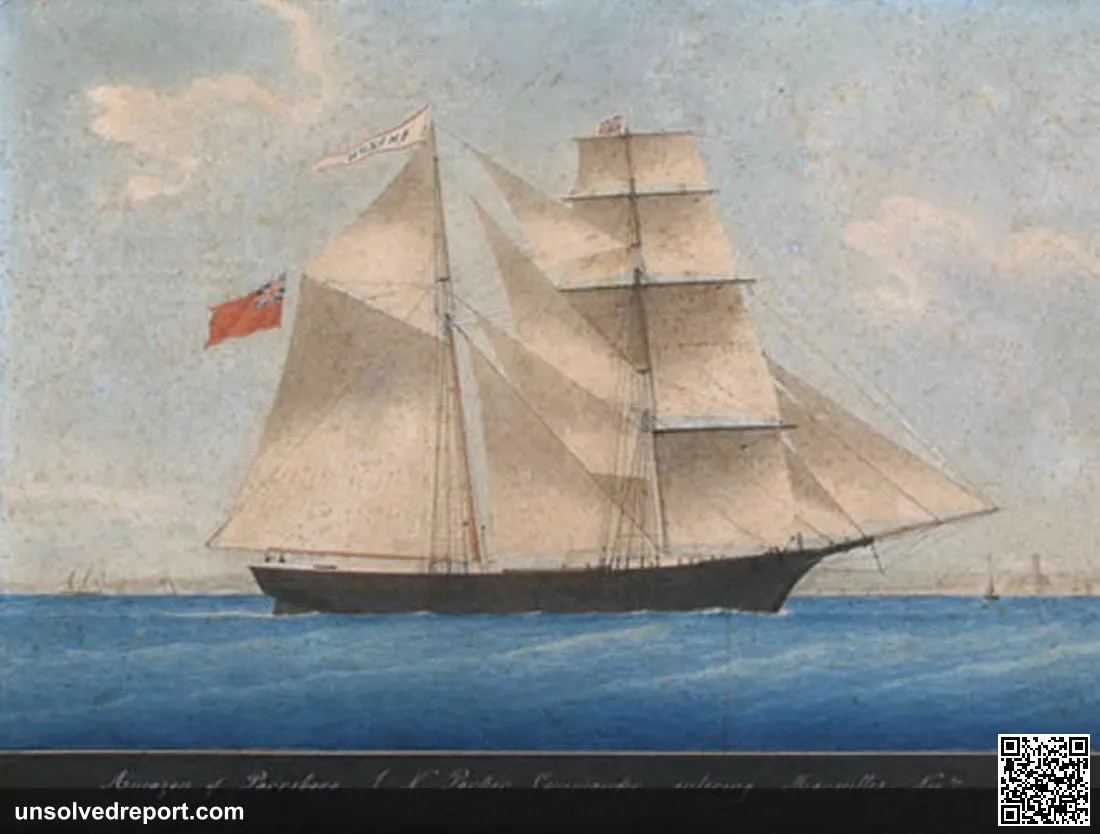
December 1872. Out in the open Atlantic, sailors spot the merchant ship Mary Celeste drifting along under partial sail. She's seaworthy. Her cargo of industrial alcohol is mostly untouched. There's plenty of food and water aboard. By every sign, this is a healthy ship.
Except she's empty. The crew, the captain, his wife, his little daughter, all gone, and the single lifeboat gone with them. No blood. No struggle. No note. Why would a seasoned crew climb into a tiny boat and abandon a perfectly sound ship in the middle of the ocean? More than a hundred years of theories about the Mary Celeste later, nobody has an answer that actually holds.
5. The Emus That Outmaneuvered an Army
You may have heard of Australia's 1932 Emu War, the time the military got sent in against birds. It's all on the public record. But hiding behind the famous story is a quieter, stranger puzzle from the same era.
Farmers and soldiers documented something the textbooks couldn't explain: tens of thousands of emus appearing and dispersing in mass movements that defied everything known about how the birds behave. They confounded the very army units sent to manage them. And here's what still nags at naturalists. These birds coordinated their movements across vast, waterless stretches of the continent, with no signal anyone has ever identified. How did they all know?
6. The Loudest Voice in the Ocean
1997. Oceanographers running underwater microphones in the South Pacific catch a sound so massive it registers on sensors more than 3,000 miles apart. They nickname it "the Bloop."
And here's why it raised the hair on a few necks: its shape looked like the call of a living creature, only far, far louder than any animal we know of. For a while, the obvious question was unavoidable. What could be that big? The explanation most scientists now accept is more grounded but no less staggering: it was an icequake, a glacier in Antarctica cracking apart. Still, the puzzle of how one natural event could throw such an extraordinary sound across the entire ocean keeps marine scientists hooked.
7. The Year the Sun Went Out
June, 1816. Snow falls on New England in the middle of summer. Crops fail across the whole Northern Hemisphere. Famine creeps through Europe and Asia. People look up at a dimmed sky and have no idea why the world has turned against them.
The cause is no longer a mystery: in 1815, Mount Tambora in Indonesia erupted, hurling so much ash into the atmosphere that it dimmed the sun worldwide. That part is settled. What stays genuinely strange is the reach of it. One volcano, on the far side of the planet, rewrote an entire year of human history, feeding famines, sparking mass migrations, even seeding new movements in art, while almost everyone living through it never knew the reason.
8. The 72 Seconds From Deep Space
August 15, 1977. A radio telescope at Ohio State University picks up a strong, tight signal coming from the direction of the constellation Sagittarius. The astronomer reading the printout is so stunned he circles the numbers and scrawls one word in the margin: "Wow!" The name stuck.
The signal lasted 72 seconds. Then it was gone. Despite searching that same patch of sky again and again, no one has ever heard it a second time. A passing comet's hydrogen cloud? Plain old interference? Something else? Every explanation has a hole in it, and no follow-up has ever pinned down where it came from. Just those 72 seconds, and that single excited word in the margin — the Wow! signal remains the strongest candidate for extraterrestrial contact ever recorded.
9. The Cliff Cities They Walked Away From
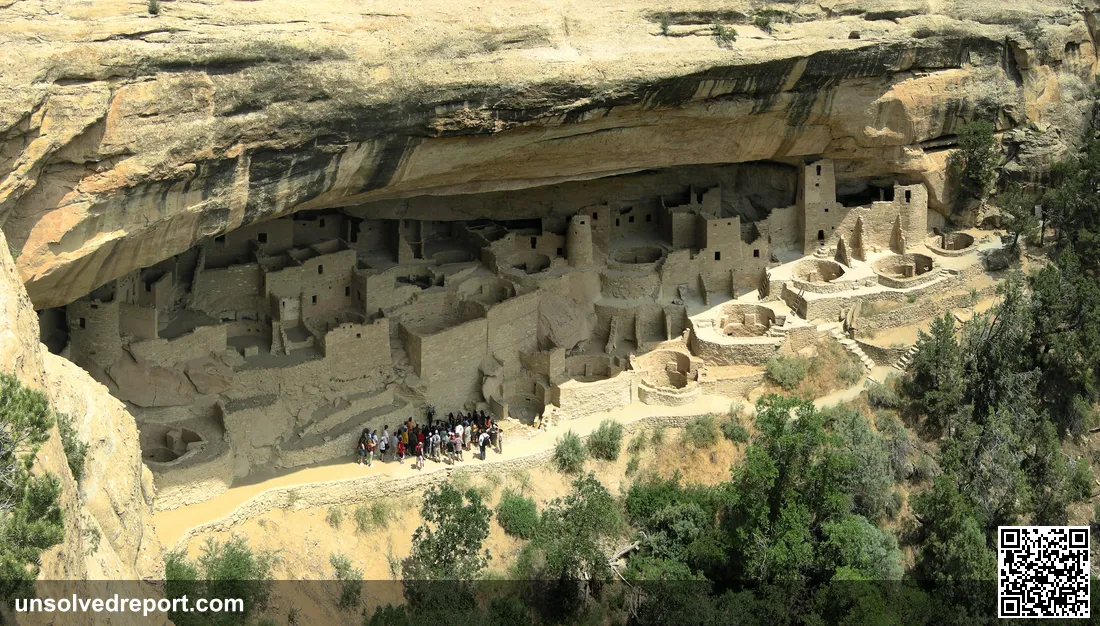
Across the American Southwest, the Ancestral Puebloans, sometimes called the Anasazi, carved entire stone cities into canyon walls, including the sprawling cliff complexes at Mesa Verde. These were not huts. They were elaborate, hard-won homes built into solid rock.
Then, sometime in the late 1200s, they left. Not slowly over centuries, but within a relatively short window, community after community simply moving on. Archaeologists have strong suspects: a long, grinding drought, social upheaval. What still gets argued over is the completeness of it. Why did so many people abandon such substantial homes so thoroughly, and so fast?
10. The Night the Telegraphs Caught Fire
Early September, 1859. The sky over much of Earth bursts into auroras so brilliant that people stand outside reading their newspapers by the light. Then it turns dangerous. Telegraph systems spark, fail, shock their operators, and in some cases keep clattering away even after being unplugged from any power.
We understand the cause now. A gigantic solar storm, watched directly by the astronomer Richard Carrington, slammed into Earth's magnetic field. The real open question points forward, and it's a little chilling. Scientists know a storm this size will hit us again someday. They just can't say when, or how a world now wired with everything from power grids to satellites would survive it.
11. The Lights That Won't Stop Coming Back
In the Hessdalen valley of central Norway, people have spent decades watching the same impossible thing. Glowing orbs and flashes that drift, hover, and dart along the valley, sometimes hanging in the air for over an hour.
Now, "mystery lights" are usually easy to wave off. These are different. An ongoing scientific monitoring project has been studying them for years and has actually captured the phenomenon on instruments. Researchers have floated explanations involving ionized gases and mineral dust in the air. The catch? No single mechanism accounts for every recorded sighting. The lights keep appearing, and the valley keeps watching.
12. The Civilizations That All Fell at Once
Around 1200 BCE, a whole web of sophisticated, interconnected Mediterranean civilizations, the Mycenaeans, the Hittite Empire, and others, came apart in roughly a single generation. Cities burned or emptied out. Trade routes dissolved. In some places, even the ability to write was lost.
Historians can name the forces in play: drought, earthquakes, revolt from within, and the shadowy raiders remembered only as the Sea Peoples. But naming the forces isn't the same as solving the puzzle. The question that still has no good answer is the simultaneity of it. Why did so many separate, tough, resilient societies collapse almost at the same time, across such an enormous stretch of the world?
---
Notice what ties all twelve together: restraint. Each one has a paper trail, a date, and credible witnesses. And each one has a gap, right where the explanation is supposed to sit.
That gap isn't a doorway for ghosts or aliens. It's an invitation to look harder at the evidence we actually have. And it points to the rarest, most honest line a historian can say out loud: we genuinely don't know yet.
Want to go deeper? Each of these cases has its own full file, with the primary sources, the leading theories, and the details that wouldn't fit here, sitting quietly, waiting for someone to open them.
Solved, half-solved, or never? Ranking the twelve
Read together, these twelve don't sit on the same shelf. Some are "mysteries" only in the sense that the last detail is missing; the mechanism is settled. Others are genuinely open, with no leading explanation that survives scrutiny. Here is where each one actually stands, using only the facts laid out above.
Effectively solved — only the fine print is missing. The cause is no longer in doubt for three of these. The 1816 "Year Without a Summer" traces cleanly to Mount Tambora's 1815 eruption; what remains "strange" is the sheer global reach, not the cause. The 1859 telegraph auroras are pinned to the solar storm Richard Carrington watched directly — the open question there points forward (when the next one hits), not backward. And "the Bloop" is now widely accepted as an icequake, a cracking Antarctic glacier; the residual puzzle is only how a natural event carried so far, not what made the sound.
Narrowed, but the core answer is still contested. For these, science has a strong suspect and no confession. Tunguska is almost certainly an asteroid or comet that airburst — yet with no crater and no confirmed fragments, the object's exact identity stays open. The abandonment of the Mesa Verde cliff cities has strong suspects (drought, upheaval) but no accepted account of why it was so complete and so fast. The Hessdalen lights have been captured on instruments and partly explained by ionized gases and dust — but no single mechanism covers every sighting.
Genuinely open — no explanation that holds. These are the ones with a gap right where the answer should be. The dancing plague of 1518 has candidates (mold, mass panic) but not one confirmed cause. The Roanoke colonists' fate — assimilation, death, or dispersal — remains one of America's oldest unsolved disappearances. The Mary Celeste still has no theory that fully accounts for a seaworthy, provisioned ship abandoned by lifeboat. The Wow! signal has never repeated and every explanation "has a hole in it." The Emu movements defied the known behavior of the birds with no identified signal. And the Bronze Age collapse — for all the named forces — still offers no answer to its defining feature: the simultaneity.
The pattern that emerges is worth naming. Where a single physical cause could be isolated (a volcano, a solar flare, an icequake), the mystery dissolved. The cases that endure are the ones about human behavior under stress or coordination without a visible signal — a town that couldn't stop, a colony that vanished, a crew that fled a sound ship, whole civilizations that fell at once. The hardest problems here aren't in the physics. They're in the people.
2025: even the "solved" numbers keep moving
Take the Wow! signal, item eight on this list. On August 14, 2025, eleven researchers at the University of Puerto Rico's Planetary Habitability Laboratory submitted "Arecibo Wow! II," a fresh reprocessing of the original 1977 Ohio SETI archival data using modern signal-processing methods. Correcting a roughly 27-second pointing offset and an inverted filter-bank channel order, they revised the signal's peak strength upward to more than 250 Janskys and its frequency to 1420.726 MHz — both different from the figures textbooks have repeated for decades (arXiv:2508.10657). None of it explains what produced the signal. It just proves that even a case pinned down to the second in 1977 can still yield new information in 2025 — which is exactly the point of this whole list. The paperwork isn't finished with us yet.
Frequently Asked Questions
Was the dancing plague of 1518 ever explained?
No single cause has ever been confirmed. Historians and toxicologists have proposed ergot poisoning, mass psychogenic illness, and stress-induced trance, but the surviving archives only record the event and its casualties, not its cause (HISTORY).
What happened to the Roanoke colonists?
Nobody knows for certain. When relief ships finally returned in 1590, the colony was empty except for the word "CROATOAN" carved into a post, and theories range from assimilation into a nearby Indigenous community to death by starvation or conflict (HISTORY).
Why did the crew abandon the Mary Celeste?
Nobody has ever explained it conclusively. The ship was found seaworthy, provisioned, and carrying a mostly undamaged cargo, with the crew and lifeboat simply gone, and no theory — from mutiny to a seaquake — accounts for every detail (Britannica).
Has the Wow! signal ever repeated?
No. Every search since 1977, including Very Large Array observations in the 1990s, has come up empty, and a 2025 reanalysis of the original data only revised its measured strength and frequency without explaining what produced it (arXiv:2508.10657).
What caused the Bronze Age collapse around 1200 BCE?
Historians point to drought, earthquakes, internal revolt, and the seaborne raiders known as the Sea Peoples, but no single explanation accounts for why so many separate, resilient civilizations fell within roughly the same generation (World History Encyclopedia).
Is there a confirmed natural explanation for the Tunguska explosion?
Most scientists agree an asteroid or comet fragment detonated in the air over Siberia in 1908, but since no crater or confirmed meteorite fragments were ever found on the ground, the object's exact identity remains debated (NASA).
Original Data: How Long Each Mystery Waited Before Anyone Arrived
The table below sets out three of the cases, using dates published by Wikipedia, The Collector, HISTORY, the National Park Service, NASA and the American Physical Society, and calculates the length of each wait.
| Mystery | Last fixed point | First return or arrival | Gap (our calculation) | What the first arrivals found | Source |
|---|---|---|---|---|---|
| Mary Celeste | Final log entry, 8 am, November 25, 1872 | The Dei Gratia reaches the ship, December 4, 1872 (land time) | 9 days (December 4 minus November 25, our calculation) | The ship's single lifeboat was missing | Wikipedia, Mary Celeste; The Collector |
| Roanoke colony | Settlers arrive, August 1587 (about 115 per HISTORY; 117 per the National Park Service) | Governor John White returns, August 1590 | 3 years (August 1590 minus August 1587, our calculation) | No trace of the colony or its inhabitants, apart from a single word, "Croatoan," carved into a wooden post | HISTORY; National Park Service |
| Tunguska event | Explosion, June 30, 1908 | Leonid Kulik's expedition reaches the blast site, 1927 (a 1921 attempt could not reach it) | 19 years (1927 minus 1908, our calculation) | No impact crater | NASA; APS News; Wikipedia, Tunguska event |
The waits run from 9 days to 3 years to 19 years. Even after the 19-year wait at Tunguska, NASA says the area still bore unmistakable signs of the explosion.
How We Compiled This
- Sources. Wikipedia's Mary Celeste and Tunguska event articles, The Collector on the Mary Celeste, HISTORY and the National Park Service on Roanoke, and NASA and APS News on Tunguska.
- Definitions. The "last fixed point" is the last dated record in each source: the final log entry for the Mary Celeste, the settlers' arrival for Roanoke, and the explosion itself for Tunguska. For the Mary Celeste, Wikipedia gives December 4 as land time and December 5 as sea time. The table uses land time, and The Collector gives December 5. For Roanoke, the gap is measured from the settlers' arrival, not from the date White sailed, because the sources give only "later that year" for his departure.
- How calculated. Mary Celeste: November 25 to December 4 is 9 days. Roanoke: August 1587 to August 1590 is 3 years. Tunguska: 1908 to 1927 is 19 years, which matches NASA's own statement that 19 years had passed.
- Limitations. The three gaps measure slightly different things: the Mary Celeste's gap runs from its last log entry, the Roanoke gap runs from the settlers' arrival, and the Tunguska gap runs from the explosion itself. The table compares three cases, not all twelve. The Roanoke headcount differs between sources, with about 115 in one and 117 in the other.
📌 Data status: verified 2026-09-29.
Sources & further reading
- HISTORY, "The Dancing Plague of 1518" — https://www.history.com/articles/what-was-the-dancing-plague-of-1518
- HISTORY, "Roanoke Colony" — https://www.history.com/articles/what-happened-to-the-lost-colony-of-roanoke
- Encyclopaedia Britannica, "Mary Celeste" — https://www.britannica.com/topic/Mary-Celeste
- NASA Science, "A Cosmic Explosion Over Siberia" — https://science.nasa.gov/earth/earth-observatory/a-cosmic-explosion-over-siberia-154488/
- World History Encyclopedia, "Bronze Age Collapse: The Decline and Fall of Mediterranean Civilization" — https://www.worldhistory.org/Bronze_Age_Collapse/
- arXiv:2508.10657, "Arecibo Wow! II: Revised Properties of the Wow! Signal from Archival Ohio SETI Data" (2025) — https://arxiv.org/abs/2508.10657
Giants of Mont'e Prama: The 3,000-Year Army Someone Smashed
A farmer's plow hit a stone head in Sardinia and uncovered a buried army of giants, all shattered. Nobody agrees who smashed them, or why. Here's what we know.

Mysterious Disappearances in History: 12 Unsolved Vanishings
12 mysterious disappearances history never solved — a vanished colony, a missing aviator, three lighthouse keepers gone overnight. A new expedition is about to test one of them.

D.B. Cooper: The $200,000 Skyjacking Nobody Can Solve
D.B. Cooper grabbed $200,000, jumped into a night storm, and was never identified. What did the FBI actually prove — and what stayed fog forever?