Irish Crown Jewels Theft 1907: The Safe That Emptied Itself
No forced lock. No alarm. No suspect ever charged. Four days before a king arrived, Dublin Castle's safe was found open and empty — so who had a key?
The safe in the heart of Dublin Castle stood open. Empty. And a king was due in four days.
Inside, until very recently, had sat a diamond star, a jeweled badge, and five gold collars belonging to the Order of St. Patrick. Now? Nothing. No lock was forced. No alarm had sounded. Whoever cleaned out that safe seemed to walk in, scoop up a fortune, and stroll back out into the Dublin afternoon like a ghost.
More than a hundred years later, no one has ever been charged. Not a single stone has ever been found — a silence as total as the empty frames left behind by the Gardner Museum heist. This is the strange, carefully documented story of the so-called Irish Crown Jewels — a locked-room mystery that actually happened.
> The 60-Second Brief
> - The regalia were assembled in 1831 by royal jewelers Rundell & Bridge, built around 394 precious stones.
> - Only 2 keys to the safe existed, and both were held personally by Sir Arthur Vicars.
> - The jewels were last seen safely locked away on 11 June 1907; the empty safe was found on 6 July 1907, just 4 days before King Edward VII's visit.
> - The regalia's value at the time ran as high as £50,000 — worth millions today.
> - A Viceregal Commission convened in January 1908 removed Vicars from office on 30 January 1908 without charging anyone.
> - Vicars was shot dead in 1921, still publicly blamed for a crime he was never convicted of.
What We Know For Certain
Start with the thing the headlines always get wrong: these weren't a king's crown jewels at all — unlike, say, King John's regalia, lost centuries earlier under the English crown itself.
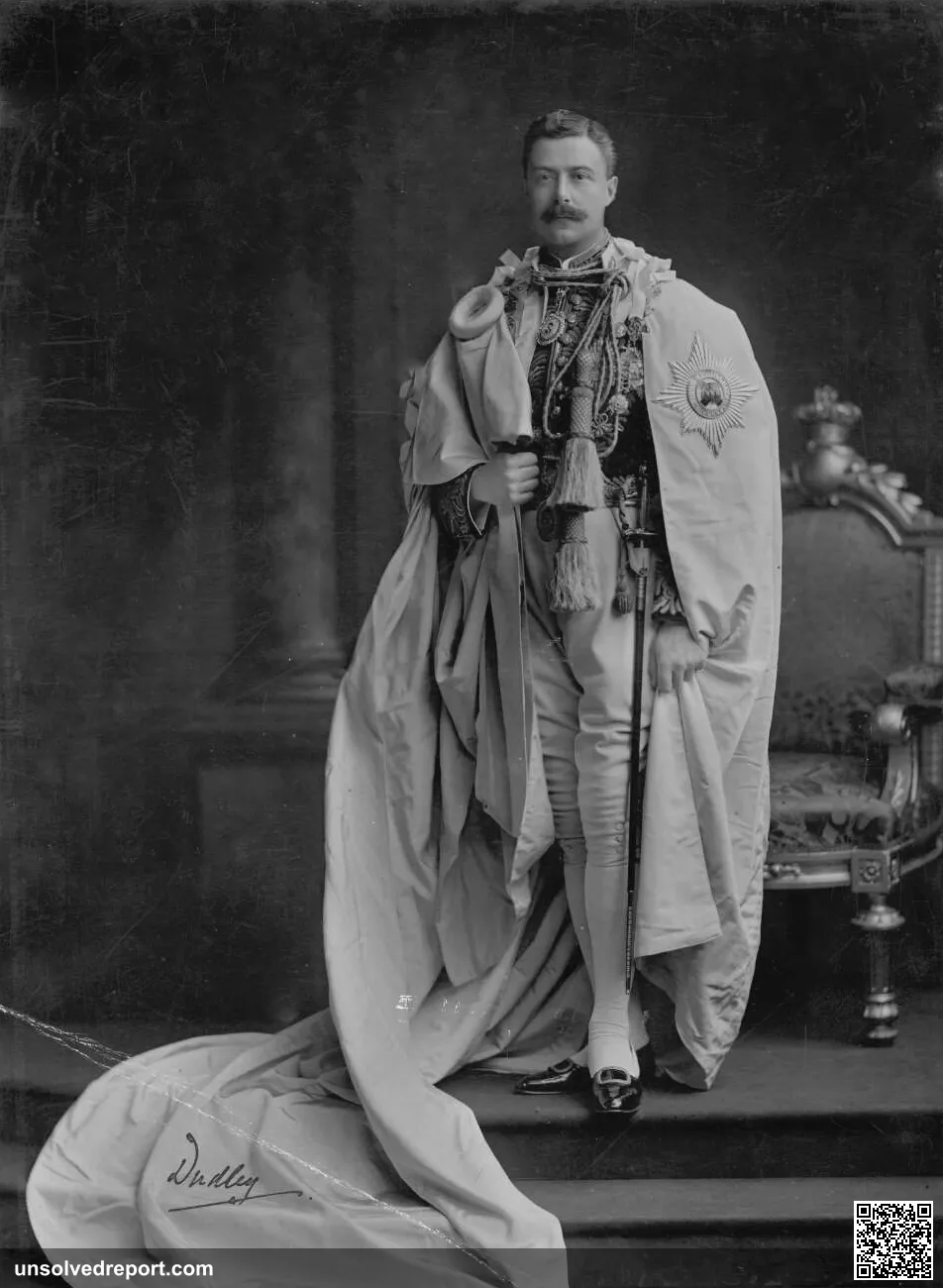
They belonged to the Order of St. Patrick, a club of knights founded in 1783 to match England's Garter and Scotland's Thistle. The dazzling insignia were put together in 1831 by the royal jewelers Rundell & Bridge and handed over by King William IV — built around 394 precious stones, plucked from jewelry that had once belonged to Queen Charlotte and from an Order of the Bath star that had belonged to George III (Wikipedia, Irish Crown Jewels; Dublin Castle).
What did they actually look like? Picture the centerpiece in the official Dublin Castle words: "a star (decorated with Brazilian diamonds, its centre featuring an emerald trefoil and ruby cross on a blue enamel background), a diamond badge and five gold jewel-encrusted collars" (Dublin Castle). The price tag at the time? As high as £50,000 (National Geographic). In today's money, the loss runs into the millions — in the same league as a single vanished gem like the Florentine Diamond.
The man trusted to guard all of this was Sir Arthur Vicars, the Ulster King of Arms, who ran the Office of Arms from the Bedford Tower in the Upper Castle Yard. On paper, it sounded airtight. Seven latch keys to the building, split among Vicars and his staff. And just two keys to the safe itself — both kept by Vicars, personally (History Ireland; Wikipedia).
Here's the first crack in that airtight story. When a brand-new strongroom was fitted in 1903, the safe turned out to be too big to fit through the door. So Vicars just... left it sitting in the library instead — which broke the Order's own rules from day one (History Ireland).
Now follow the clock, because the timeline is precise and quietly chilling. The jewels were last seen safely locked away on 11 June 1907, when Vicars showed them off to the office librarian. Then the warnings began — and everyone ignored them. On 3 July, the building's front door was found unlocked. Nothing was done. On the morning of 6 July, the strongroom door itself was found open. Still no alarm. Only that afternoon, around 2:15 p.m., did someone finally open the safe — and find it empty (History Ireland).
Of all the days for a fortune to vanish, this was the worst possible one. King Edward VII and Queen Alexandra were due in Dublin within days, and Lord Castletown was supposed to be knighted into the Order wearing that very regalia. The ceremony was scrapped. The King, by every account, was furious (National Geographic; History Ireland).
Then the Dublin Metropolitan Police looked closer, and the puzzle only got deeper. The safe hadn't been forced. And in the locksmiths' professional opinion, it couldn't have been opened with a copied key (History Ireland). Read that again. Whoever emptied that safe used a real key — then didn't bother to lock anything back up, and simply left.
In January 1908, the Lord Lieutenant, Lord Aberdeen, ordered a Viceregal Commission of inquiry. And this is the detail that has made people's eyes narrow ever since. The commission wasn't told to find the thief. Its official job was to examine whether Vicars "exercised due vigilance and proper care as the custodian" — not to investigate the theft itself (National Geographic; History Ireland). It duly decided Vicars had failed in his duty. He was thrown out of office on 30 January 1908 and eventually replaced by Captain Neville Wilkinson (Wikipedia).
Vicars never got his name back. He was shot dead by the IRA at his Kerry home, Kilmorna House, on 14 April 1921, a placard left on his body branding him an informer (Dictionary of Irish Biography).
The Real, Unanswered Riddle
Sweep away all the colorful stories, and a hard knot of genuine questions sits there, untouched.
Nobody knows who took the jewels. Nobody knows how that safe opened without force and without a copied key. And nobody knows where the regalia went. The most level-headed verdict — the one shared by historians and the original investigators alike — is bleak: the pieces were almost certainly smashed apart soon after the theft, the loose stones scattered into other jewelry, which makes ever finding them nearly impossible (National Geographic; History Ireland).
And one more question won't go away: why was the official inquiry built to put Vicars on trial instead of catching the thief? Was it just plodding bureaucratic caution — or a deliberate move to steer everyone's eyes away from someone awkward? The record proves the inquiry was framed in that strange way. What it can't tell us is the reason behind it.
The Theories — Read With Care
Everything below is speculation and old allegation, not proven fact. The people involved are long dead, and none of this has ever stood up in a courtroom.
Theory 1: Francis Shackleton (the chief suspicion). Frank Shackleton — yes, brother of the famous Antarctic explorer Ernest Shackleton — worked as Dublin Herald in Vicars's office and had lodged with him for over two years. That gave him an easy, daily view of the keys and the routines. And in 1907, he was badly in debt (History Ireland). Vicars himself became convinced Shackleton was the thief, claiming he "treacherously took impressions of my keys when I was in my bath." In his 1921 will, Vicars went further still, naming "Francis Shackleton" as "the real culprit and thief" — a man, he said, the government had quietly protected (Dictionary of Irish Biography). But here's the snag: Shackleton had an alibi — he was out of Dublin when the theft came to light — and Detective Inspector Kane stated flatly that "not a shred of evidence had been found against him" (Dublin Castle; History Ireland). He was later jailed in 1913 for a completely unrelated fraud. That tells you about his character — not that he did this.
Theory 2: Shackleton and Captain Richard Gorges. From as early as 1908, and later revived in Irish Times accounts, ran a darker claim: that Shackleton teamed up with his old army comrade Captain Richard Gorges to get hold of the safe key — in one version, by getting Vicars drunk on whiskey — and then whisked the jewels out of the country (Wikipedia; History Ireland). Gorges later boasted he knew where the jewels had ended up. But his claims were brushed aside, and he had a violent history of his own. The tale keeps coming back. It has never been proven.
Theory 3: A scandal too embarrassing to put on trial. Some accounts whisper that the social world around the Office of Arms involved private parties that — had they spilled out in a public trial under the harsh laws of that era — would have ignited a colossal scandal. The fear of that exposure, the theory goes, may be why the whole case was quietly allowed to wither (History Ireland). It's one way to explain both the inquiry's odd focus and the total absence of any prosecution. But it leans on period rumor, not hard evidence.
Theory 4: A cover-up — or a "joke" that went wrong. In 1912–13, the politician Laurence Ginnell claimed the police had actually identified the thief, but that the report was buried to avoid scandal. A separate, much later claim insisted the jewels had been swiped as a prank and mailed back (Irish Central, On This Day; History Ireland). Neither has ever been backed up.
More than a hundred years on, the Irish Crown Jewels remain the perfect locked-room mystery: a real theft, a paper trail thick with negligence and rumor, and a hoard of stones that simply evaporated — much like a legendary blade such as the Honjo Masamune, gone without a trace despite everyone knowing exactly what it looked like. The facts are rock solid. The answer is still out there, somewhere — possibly glinting in a ring or a brooch nobody would ever think to question.
Frequently Asked Questions
Were the Irish Crown Jewels really crown jewels?
No. They belonged to the Order of St Patrick, a chivalric order founded in 1783, not to any monarch's personal regalia. They were assembled in 1831 by the royal jewelers Rundell & Bridge and built around 394 precious stones (Wikipedia).
How did the Irish Crown Jewels go missing?
On 6 July 1907, someone opened the strongroom safe at Dublin Castle and emptied it without forcing the lock or using a copied key, according to the locksmiths' own assessment at the time. Only two keys to the safe existed, and both were kept personally by Sir Arthur Vicars (History Ireland).
Was anyone ever charged with stealing the Irish Crown Jewels?
No. Despite a Viceregal Commission of inquiry in 1908, no one was ever arrested or charged; Vicars was dismissed from office for failing to safeguard the regalia rather than being investigated as a suspect himself (National Geographic).
Who was the leading suspect in the theft?
Francis Shackleton, brother of the explorer Ernest Shackleton, who worked in Vicars's office and had daily access to the keys and routines; Vicars himself later named him "the real culprit and thief" in his will. Shackleton had an alibi placing him outside Dublin and was never charged (Dictionary of Irish Biography).
What happened to Sir Arthur Vicars after the theft?
He was dismissed from his post as Ulster King of Arms on 30 January 1908 and spent the rest of his life trying to clear his name. He was shot dead at his Kerry home by the IRA on 14 April 1921, branded an informer on a placard left on his body (Dictionary of Irish Biography).
Have the Irish Crown Jewels ever been found?
No. Not a single stone has ever surfaced. Historians consider it most likely that the pieces were broken apart soon after the theft and the loose stones scattered into other jewelry, making recovery almost impossible (History Ireland).
Original Data: What the Stolen Regalia Would Be Worth Today
No single source both states the jewels' original 1907 price tag and runs it through an inflation calculator to see what it means in today's money — and the sources that do give a 1907 valuation don't even agree with each other. The table below takes the two different period valuations on record, applies the same UK consumer price index conversion to both, and checks the result against Dublin Castle's own modern estimate.
| Contemporary valuation source | Stated value in 1907 | UK CPI index, 1907 | UK CPI index, 2026 | Inflation-adjusted value today | Source |
|---|---|---|---|---|---|
| National Geographic | "as much as £50,000" (source's own upper-bound estimate, attributed to unnamed contemporaries) | 9.400 | 1,467.818 | £7,807,544 (50,000 × 1467.818 ÷ 9.400, our calculation) | National Geographic; CPI index from in2013dollars.com UK inflation calculator |
| Mental Floss | more than £30,000 | 9.400 | 1,467.818 | more than £4,684,527 (30,000 × 1467.818 ÷ 9.400, our calculation) | Mental Floss; same CPI index |
| Dublin Castle (official visitor site) | not stated in pounds sterling | — | — | "several million euro" (as stated, not a calculation) | Dublin Castle |
Even the lower of the two period valuations comes out to more than £4.6 million in today's purchasing power once run through the same CPI conversion — broadly in line with Dublin Castle's own "several million euro" estimate, despite National Geographic and Mental Floss disagreeing by £20,000 on the original 1907 price tag. For scale, that figure is still a small fraction of the more than $500 million now attributed to the Isabella Stewart Gardner Museum's 1990 art heist, the largest unsolved theft in art history — a reminder of how wildly "priceless" can vary even among history's most famous unsolved cases.
How We Compiled This
- Sources. National Geographic's and Mental Floss's accounts of the 1907 theft (for the two competing period valuations), the in2013dollars.com UK inflation calculator (which publishes the underlying CPI index figures used here), Dublin Castle's official account, and PBS NewsHour's reporting on the Gardner Museum heist.
- Definitions. "CPI-adjusted value" is the 1907 valuation multiplied by the ratio of the UK Consumer Price Index in 2026 to the UK Consumer Price Index in 1907, giving the amount of money today with equivalent general purchasing power.
- How calculated. Inflation-adjusted value = stated 1907 value × (CPI in 2026 ÷ CPI in 1907) = stated value × (1,467.818 ÷ 9.400). This reproduces the total in2013dollars.com itself publishes for the £50,000 figure, and the same ratio was applied independently to the £30,000 figure.
- Limitations. National Geographic and Mental Floss cite different original 1907 valuations for the same regalia (£50,000 vs. "more than £30,000"), and it could not be determined from the fetched sources which figure the era's own assessors actually used. A general consumer price index adjusts for the changing cost of everyday goods, not specifically for jewelry, gemstones, or collectibles, so it is only a rough proxy for what the regalia's materials or historical significance would fetch today. The $500 million Gardner Museum figure is in U.S. dollars and is presented only as an unconverted scale comparison, not a currency-equivalent calculation.
📌 Data status: verified 2026-09-29.
Sources & Further Reading
- National Geographic — Why Ireland's missing crown jewels remain unsolved
- Dublin Castle (official) — The Theft of the Irish Crown Jewels
- History Ireland — The Theft of the Irish Crown Jewels, 1907
- Dictionary of Irish Biography — Vicars, Sir Arthur Edward
- Wikipedia — Irish Crown Jewels

Awa Maru Gold: 40 Tons Vanished, 2,004 Died, No Answer
The US promised in writing not to sink the Awa Maru — then a submarine did anyway, taking 2,004 lives and (maybe) 40 tons of gold. Did it ever exist?
El Carambolo Treasure: The Gold That Wasn't Supposed to Exist
3 kilos of 2,700-year-old gold under a Seville shooting club, and a lab test that demolished the Atlantis theory. A 2025 dig adds a new twist.

El Dorado: The Golden Man Nobody Can Find
El Dorado was never a city — it was a man dipped in gold dust. So why did armies die hunting the wrong myth for 400 years? The real story is stranger.