Gardner Museum Heist: The $500M Theft Nobody Can Solve
Gardner Museum heist: two fake cops, 13 masterpieces, $500M gone in 81 minutes. The FBI says it knows who did it — so why is the art still missing?
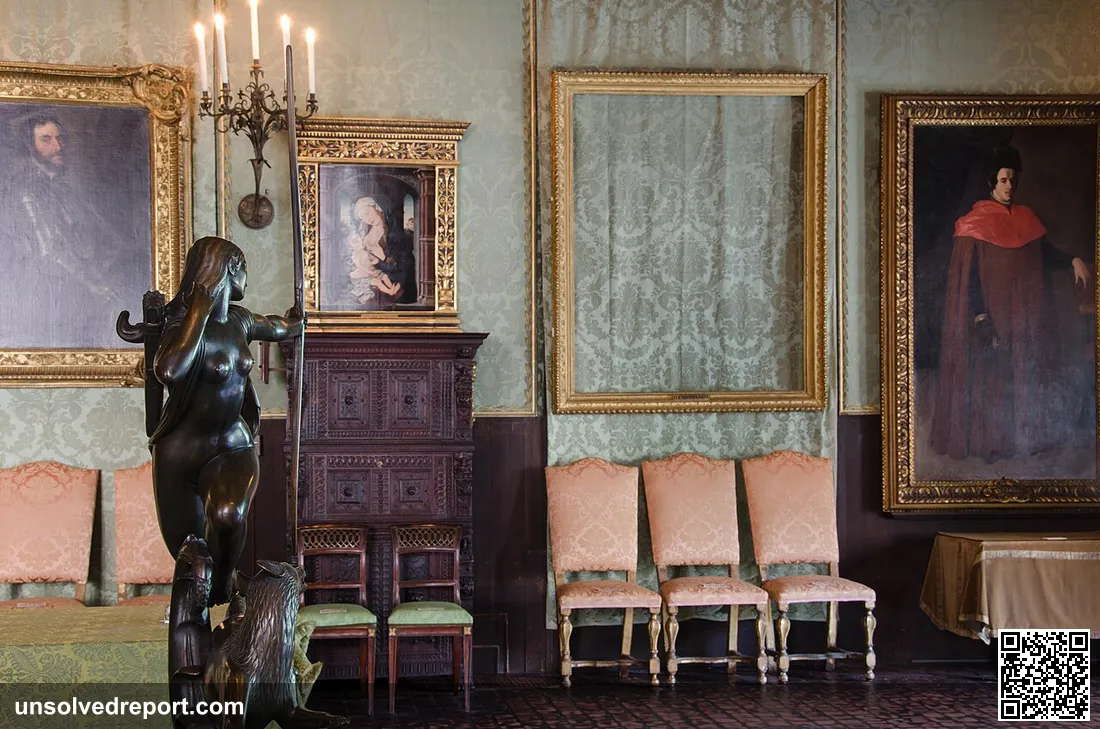
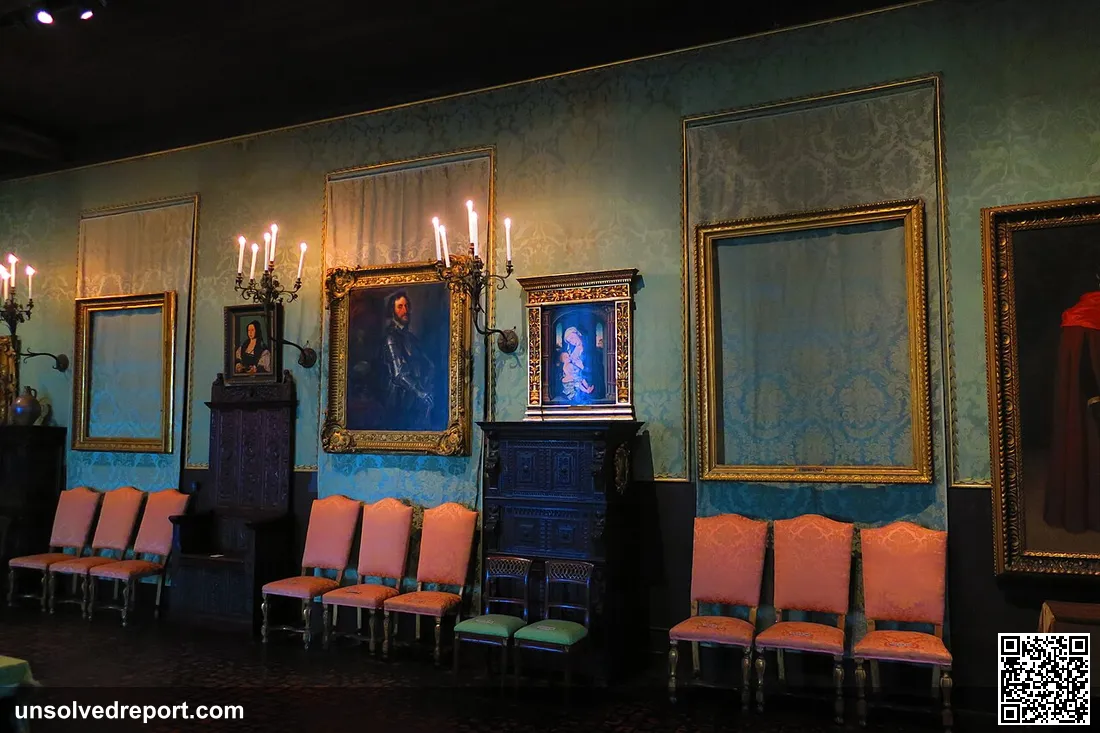
There are empty frames hanging on the walls of Boston's Isabella Stewart Gardner Museum. Not damaged. Not under repair. Just empty — gilded rectangles framing bare wall, in a room where a Vermeer and two Rembrandts used to live. No curator would normally allow this. But more than three decades after thieves cut the canvases loose in the dark, the frames are still there, still waiting for the paintings to come home. It is the eeriest detail in the largest unsolved art theft in history. And every word of it is true — even after a retired FBI agent announced in 2025 and 2026 that he believes he finally knows exactly who did it.
> The 60-Second Brief
> - At 1:24 a.m. on March 18, 1990, two men disguised as Boston police talked their way through the Gardner's side entrance.
> - The thieves spent 81 minutes inside and made off with 13 works of art, including a Vermeer and three Rembrandts.
> - The haul's value has been estimated as high as $500 million, making it the largest unsolved art theft in U.S. history.
> - The reward for the paintings' return has grown from $1 million to $10 million since 2017.
> - The statute of limitations on the theft expired in 1995, so the thieves can no longer be prosecuted for the crime itself.
> - In 2025 and 2026, retired FBI agent Geoffrey Kelly — who led the case for more than 20 years — publicly named the suspects he believes carried out the heist.
What We Know For Sure
St. Patrick's Day, 1990. The city had been celebrating, and by the small hours of March 18 it was finally winding down. At about 1:24 a.m., two men in Boston police uniforms pressed the buzzer at the Gardner's side entrance and said they were answering a call about a disturbance (FBI; Wikipedia). The guard on duty did the one thing he was never supposed to do. He buzzed them in through the employee entrance (Isabella Stewart Gardner Museum).
That single decision opened the door to everything. Inside, the men told the guard there was a warrant out for his arrest — and as they did it, they steered him away from the only alarm button in the building. Then they handcuffed both guards on duty, wrapped them in duct tape, and left them down in the basement (Wikipedia). For the next 81 minutes, the thieves owned the museum. They made two trips and were gone by roughly 2:45 a.m. (Smithsonian Magazine; FBI).
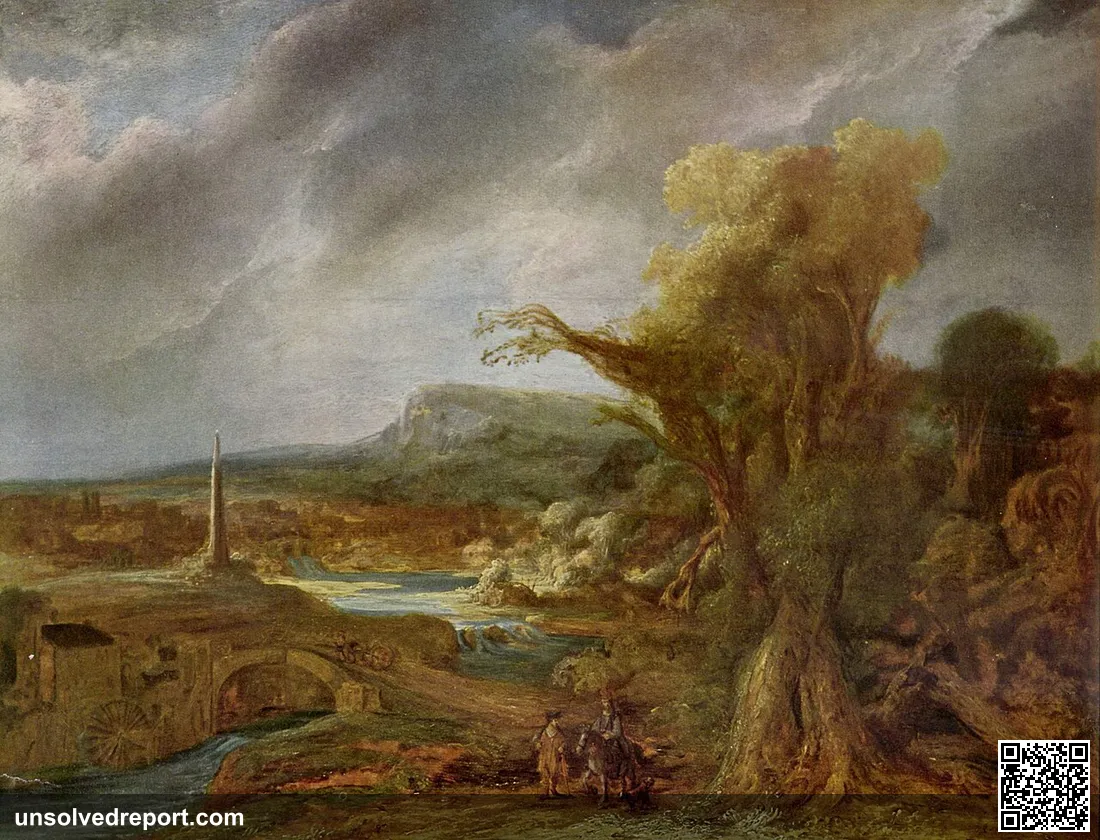
They left with 13 works of art. The crown jewels among them: Johannes Vermeer's The Concert — one of only roughly three dozen Vermeers left on the planet, and often called the single most valuable stolen object on Earth — and Rembrandt van Rijn's Christ in the Storm on the Sea of Galilee, the only seascape the master is known to have painted (Smithsonian Magazine). The rest of the haul reads like a strange, lopsided shopping list: Rembrandt's A Lady and Gentleman in Black and his tiny self-portrait etching, Portrait of the Artist as a Young Man; Govaert Flinck's Landscape with an Obelisk; Édouard Manet's Chez Tortoni; five works by Edgar Degas; an ancient Chinese bronze gu, a ceremonial beaker; and a bronze eagle finial that had once topped a Napoleonic flagpole (Isabella Stewart Gardner Museum; Wikipedia) — an irreplaceable-object-into-thin-air story not unlike the disappearance of the Honjo Masamune, Japan's greatest sword, which vanished just as completely.
These were not careful art lovers. They sliced the Rembrandt canvases straight out of their frames instead of gently lifting them free (Isabella Stewart Gardner Museum). On the way out, they grabbed the museum's video surveillance tape and the printout from the motion-detector system, thinking they'd erased their tracks. They missed one thing. The motion-detector data had also quietly logged itself to a computer — and investigators got it back (CNN).
So how much did they walk away with? Estimates put the haul at roughly $200 million at the time, with later assessments climbing toward $500 million — which makes this, by property value, the biggest art theft in U.S. history, in the same league of loss as the missing Patiala Necklace, whose diamonds also walked out the door and never came back (Wikipedia; PBS NewsHour). The reward has grown to match the desperation. It started at $1 million, jumped to $5 million in 1997, and doubled again to $10 million in 2017 for information leading to the return of all 13 works in good condition — with a separate $100,000 on offer for the eagle finial alone (Wikipedia; Isabella Stewart Gardner Museum). It is the kind of bounty that recalls the hunt for D.B. Cooper, another American case where a huge reward never flushed out an answer.
And here is where the story gets stuck. Not one of the 13 works has ever been recovered. No one has been charged with the theft itself (FBI) — a dead end that echoes the Irish Crown Jewels theft, another case where priceless objects vanished and nobody was ever convicted.
The Real Mystery
The question is almost childishly simple. Where is the art, and who took it?
Now here's the strange part. The thieves walked right past Titian's The Rape of Europa — widely considered the most valuable painting in the whole collection, one of the great Italian Renaissance works in any American museum — and left it hanging on the wall (Smithsonian Magazine). Instead they grabbed a modest Degas sketch and a flagpole ornament. Think about that. They had the run of one of the world's great collections and skipped the best thing in it. For decades, investigators have argued over what that means. Were these amateurs who simply didn't know a masterpiece when they saw one? Or professionals checking off a very specific list someone handed them? (EBSCO Research Starters)
In March 2013, on the 23rd anniversary, the FBI said something that sounded like a breakthrough. It announced it believed, "with a high degree of confidence," that it had identified the thieves — members of a criminal organization rooted in the mid-Atlantic states and New England. The Bureau added that the art had likely traveled to Connecticut and the Philadelphia area, where someone tried to sell it. And then the trail simply went cold (WBUR; ABC News). To this day, the FBI won't publicly name the people involved, pointing to the recovery effort still underway.
There's a cruel twist baked into all of this. The statute of limitations on the theft ran out in 1995 — meaning the thieves can no longer be prosecuted for it. Federal authorities have even offered immunity outright in exchange for the safe return of the paintings (Wikipedia). So picture the gap: the FBI says it knows who, it knows the region the art reached, and it's willing to let go of any charges. And still the canvases stay missing. That space — between knowing the likely culprits and laying hands on the paintings — is the whole mystery in a nutshell.
Theories and Loose Threads
What follows are the theories and leads that have circulated publicly over the years. None has ever turned up a recovered painting. None of the named individuals has been charged with the heist, and several are now dead. Treat all of it as unproven — interesting, but unconfirmed.
The organized-crime theory. This is the line that gets reported most, and it lines up with the FBI's 2013 statement: the heist traces back to Boston-area criminal networks. Over the years, reporters have linked various figures to the case, but the Bureau has never crossed the line into public accusation (Boston Globe). It's a theory, not a verdict.
The amateurs theory. The hacked-up canvases. The bizarre mix of priceless and almost-worthless objects. The fact that they left Titian's Europa right where it hung. To some, all of this points to thieves with little real art knowledge — maybe hired hands just following orders (EBSCO Research Starters).
The buried-trail theory. Since the FBI believes the art drifted south and briefly surfaced for sale, some investigators suspect it kept changing hands among people who later died — carrying the secret of its location to the grave, or stashing it somewhere no one ever revealed (WBUR). Plausible. Still unproven.
2025–2026: A retired FBI agent finally names names
For decades, the Bureau hinted at answers without saying them out loud in public. That changed. In a March 2025 interview marking the heist's 35th anniversary, retired FBI agent Geoffrey Kelly — who led the Gardner investigation for more than two decades before retiring in 2024 — told the Boston Globe he believes the two men who walked in dressed as police were petty criminals George Reissfelder and Leonard DiMuzio, let in with help from museum guard Richard Abath and sent by Dorchester mob associate Carmello Merlino, who Kelly says supplied a "shopping list" of what to take (Boston Globe). A year later, Kelly went further in his book Thirteen Perfect Fugitives, published around the heist's 36th anniversary in March 2026, flatly declaring that "the 'whodunit' part of the case is solved" and naming Connecticut mobster Robert Gentile as another figure tied to the art's trail through Connecticut and Philadelphia (CBS Boston). Every suspect Kelly names is now dead, and not one painting has surfaced.
For now, the most honest answer is the one those empty frames give every visitor who walks in. Isabella Stewart Gardner's will forbids any permanent change to how the collection is arranged, so the frames don't come down — they hang there as a quiet, stubborn placeholder for masterpieces that someone, somewhere, might still hand back (Smithsonian Magazine). The reward still stands. The case stays open. And somewhere out there, a Vermeer that the whole world is hunting may be sitting in the dark, waiting for the wall that still has its name on it.
Frequently Asked Questions
Has the Gardner Museum heist ever been solved?
Not officially. No one has ever been charged with the theft, and none of the 13 works has been recovered. Retired FBI agent Geoffrey Kelly has said he believes the "whodunit" is solved based on decades of investigation, but that is his personal assessment, not a criminal conviction (CBS Boston).
Who does the FBI believe stole the art from the Gardner Museum?
In March 2013, the FBI said it believed "with a high degree of confidence" that the thieves belonged to a criminal organization based in the mid-Atlantic and New England, and that the art had traveled toward Connecticut and Philadelphia (WBUR). Retired lead agent Geoffrey Kelly later went further, naming petty criminals George Reissfelder and Leonard DiMuzio as the two men who entered the museum, with Dorchester mob associate Carmello Merlino as the alleged mastermind (Boston Globe).
Why hasn't anyone been arrested for the Gardner Museum theft?
The statute of limitations on the theft itself expired in 1995, and federal authorities have offered immunity for the art's safe return rather than prosecution. On top of that, every individual publicly named as a suspect by investigators, including Kelly's 2025–2026 account, has since died (Wikipedia).
What is the reward for the stolen Gardner Museum paintings?
The Isabella Stewart Gardner Museum offers $10 million for information leading to the recovery of all 13 works in good condition, an amount that grew from an initial $1 million reward and a $5 million increase in 1997. A separate $100,000 reward exists for the bronze eagle finial alone (Isabella Stewart Gardner Museum).
What did the retired FBI agent's 2025–2026 book reveal about the Gardner heist?
Geoffrey Kelly, who led the investigation for more than 20 years, used his book Thirteen Perfect Fugitives and earlier interviews to name the men he believes committed and organized the theft, including a guard he suspects helped the thieves inside, and a Connecticut mobster he ties to the art's later trail. He describes the "whodunit" as solved even though no art has been recovered (CBS Boston).
Why did the thieves leave Titian's The Rape of Europa, the museum's most valuable painting?
No one knows for certain, and it remains one of the case's biggest puzzles. Investigators have long debated whether it shows the thieves were amateurs who didn't recognize the collection's true masterpiece, or professionals working from a specific shopping list that simply didn't include it (EBSCO Research Starters).
Original Data: Gardner Theft Value and Reward Figures Against Inflation
The Gardner theft's value estimate grew from $200 million to $500 million, and its recovery reward grew from $1 million to $10 million — but no source has run these figures through an inflation calculator side by side. The table below does that using published U.S. CPI data.
| Figure | 1990 value | Later figure (as reported) | Inflation-adjusted 1990 value (to 2026) | Comparison | Source |
|---|---|---|---|---|---|
| Estimated theft value | $200 million (FBI estimate in 1990) | $500 million (FBI estimate "by 2000," per Wikipedia); PBS says the works are "now valued at more than $500 million" | $512,593,726 (200,000,000 × 334.980 ÷ 130.700, our calculation) | Not directly comparable: the $500 million figure is dated to 2000, not 2026, so it cannot be set against a 2026 inflation adjustment | Wikipedia, "Isabella Stewart Gardner Museum theft"; PBS NewsHour; in2013dollars.com |
| Recovery reward | $1 million (posted within three days of the theft; raised to $5 million in 1997) | $10 million (2017) | $2,562,969 (1,000,000 × 334.980 ÷ 130.700, our calculation) | About 3.9× the inflation-adjusted figure (10,000,000 ÷ 2,562,969 ≈ 3.90, our calculation) | Wikipedia, "Isabella Stewart Gardner Museum theft"; in2013dollars.com |
Running the 1990 figures through the same CPI conversion, $200 million in 1990 dollars is worth about $512.6 million in 2026 dollars, and $1 million is worth about $2.56 million. The $10 million reward is about 3.9 times that inflation-adjusted figure.
How We Compiled This
- Sources. Wikipedia's article on the theft (the FBI's $200 million estimate in 1990, raised to $500 million by 2000, and the reward history of $1 million, $5 million in 1997 and $10 million in 2017), PBS NewsHour (works "now valued at more than $500 million"), and CPI index figures from in2013dollars.com's U.S. inflation calculator.
- Definitions. "Inflation-adjusted 1990 value" is the 1990 dollar figure multiplied by the ratio of the U.S. Consumer Price Index in 2026 to the index in 1990.
- How calculated. Inflation-adjusted value = 1990 figure × (CPI 2026 ÷ CPI 1990) = 1990 figure × (334.980 ÷ 130.700). This reproduces the totals in2013dollars.com publishes for both the $200 million ($512,593,726.09) and $1 million ($2,562,968.63) conversions. The reward multiple = $10,000,000 ÷ $2,562,969.
- Limitations. Wikipedia dates the $500 million estimate to 2000 and the $10 million reward to 2017, so neither is a 2026 figure; a like-for-like inflation comparison would need CPI values for those years, which this table does not use. The reward comparison is a 2017 amount against a 2026 inflation adjustment.
📌 Data status: verified 2026-09-29.
Sources and Further Reading
- Isabella Stewart Gardner Museum — The Theft
- Federal Bureau of Investigation — Isabella Stewart Gardner Museum Heist
- Smithsonian Magazine — What to Know About the Gardner Museum Heist
- PBS NewsHour — What to know about the world's largest art heist
- WBUR — FBI Says It Has Identified Thieves In Gardner Art Heist
- The Boston Globe — Whodunit? A list of the suspects in the Gardner Museum heist
- CNN — Five things you probably didn't know about the biggest art heist in history
- Wikipedia — Isabella Stewart Gardner Museum theft
- The Boston Globe — On the 35th anniversary, retired FBI agent offers theory on whodunnit
- CBS Boston — Isabella Stewart Gardner Museum marks 36 years since heist

The Dancing Plague of 1518: 400 Danced, No One Could Stop
In July 1518, one woman's dancing spread to 400 people in Strasbourg who couldn't stop. The records are real — so why has no one ever explained why?
Al Naslaa Rock: The Saudi Boulder Split Like a Laser
A Saudi boulder split by a perfectly straight gap that looks laser-cut. No tool marks, no debris — so what actually sliced Al Naslaa in two?
Dwarka Submerged City: The Sunken Ruins Nobody Can Explain
Divers found cut stone walls and 120+ anchors submerged off Dwarka, India. Is it Krishna's legendary drowned city? The age nobody can pin down.